Oct 26, 2026Import & Shipping Guide
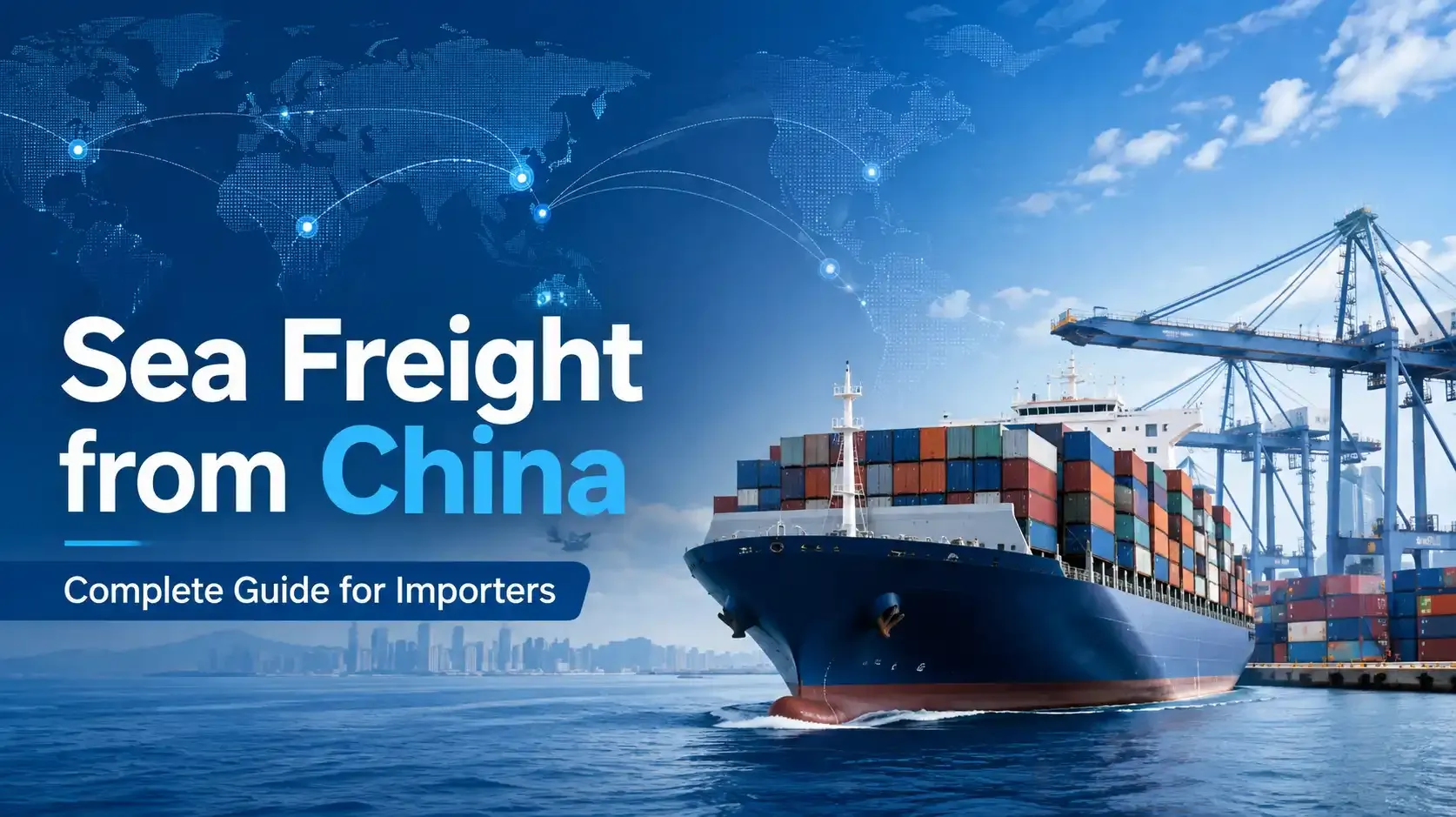
Sea Freight from China: Complete Guide for Importers
Learn how sea freight from China works, including FCL, LCL, CBM, container sizes, shipping costs, transit time, documents and consolidation for importers.
Author: Connor Ma, Founder of SML Supply
Published by: SML Supply
Introduction
Sea freight is one of the most widely used shipping methods for importing wholesale products from China.
For buyers purchasing larger quantities, ocean shipping can offer a much lower transportation cost per unit than air freight or international courier services.
However, choosing sea freight involves more than simply comparing ocean freight rates.
Importers also need to understand:
- FCL and LCL shipping
- Container sizes
- Cargo volume and CBM
- Origin and destination charges
- Export documentation
- Customs clearance
- Transit time
- Supplier consolidation
- Final delivery costs
Understanding these factors before placing an order can help buyers avoid unexpected logistics costs and delays.
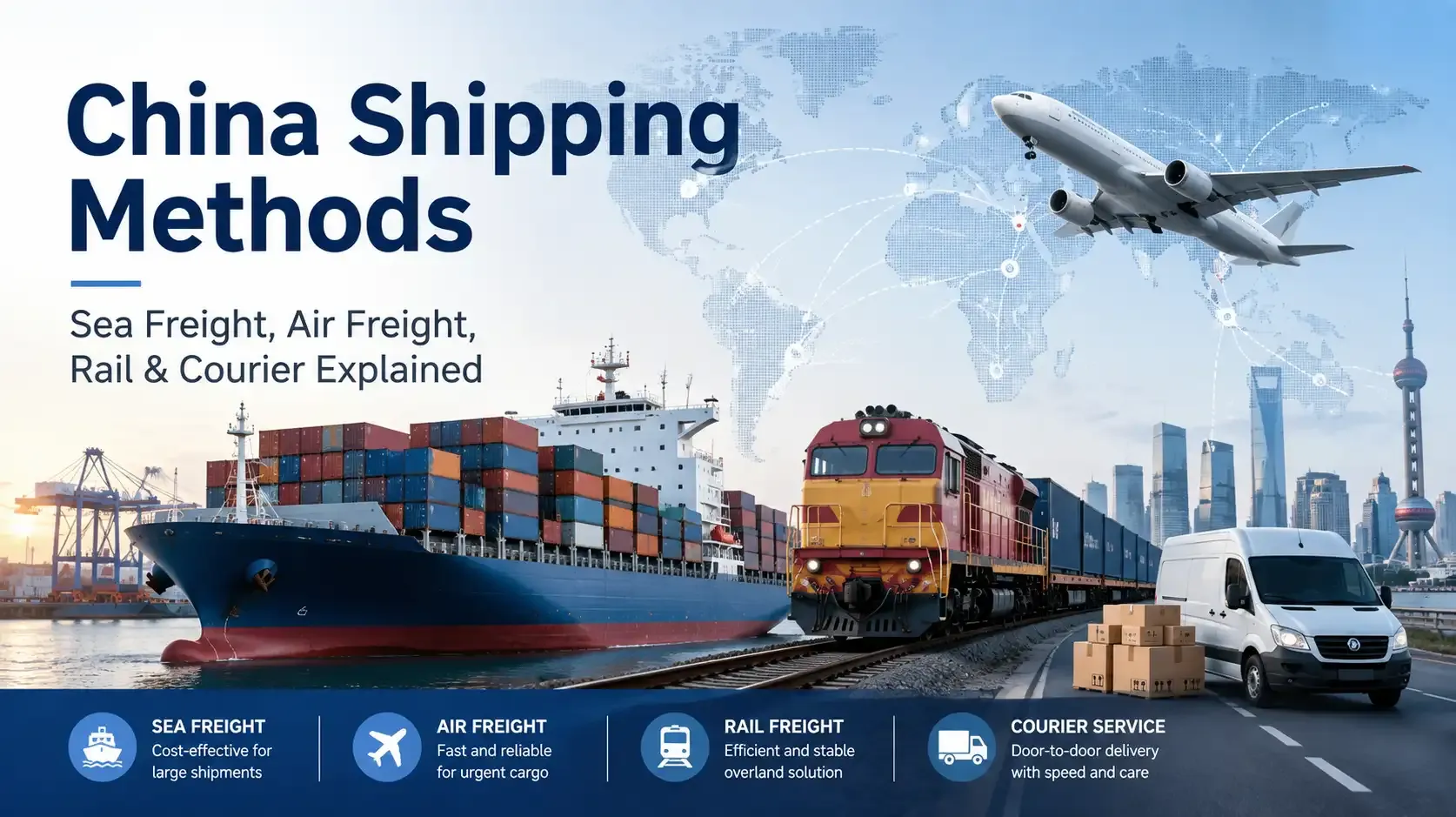
If you are still comparing different transportation options, read our China Shipping Methods guide for an overview of sea freight, air freight, rail freight and courier shipping.
What Is Sea Freight from China?
Sea freight is the transportation of commercial cargo from China to international destinations by container vessel.
Products are normally transported from the supplier to a warehouse, consolidation facility or Chinese port before being loaded into a shipping container.
The cargo then travels by sea to the destination port.
After arrival, the shipment may go through:
- Port unloading
- Customs clearance
- Import duty and tax processing
- Destination handling
- Inland transportation
- Final delivery
For this reason, the ocean freight quotation itself represents only one part of the total shipping cost.
Importers should consider the complete logistics process from the Chinese supplier to the final destination.
When Should Importers Use Sea Freight?
Sea freight is usually suitable when shipment volume is relatively large and delivery is not extremely urgent.
It is commonly used for:
- Wholesale orders
- Private label products
- Bulk merchandise
- Apparel
- Home products
- Kitchenware
- Toys
- Packaging
- Textiles
- Promotional products
- General consumer goods
Sea freight becomes especially attractive when products are relatively bulky or heavy.
For example, shipping several cubic meters of towels, gift bags or household products by air may make the logistics cost too high compared with the product value.
In these situations, ocean shipping is often more practical.
FCL vs LCL Shipping from China
One of the first decisions importers need to make is whether to use FCL or LCL shipping.
What Is FCL?
FCL means Full Container Load.
The importer books an entire container for the shipment.
The container does not necessarily need to be completely full, but the space is reserved for one shipment.
FCL is commonly used when cargo volume is large enough to justify booking a full container.
Advantages of FCL
FCL can offer several advantages:
- Lower unit shipping cost for larger volumes
- Less cargo handling
- Lower risk of mixing cargo with other shipments
- Easier loading planning
- Faster processing compared with some LCL shipments
- Better control over container space
For businesses importing regularly, FCL can be an efficient option once order volume reaches an economical level.
What Is LCL?
LCL means Less Than Container Load.
Several different importers share space inside one shipping container.
Each shipment normally pays according to its cargo volume or chargeable measurement.
LCL is useful when the order is too large for courier or air freight but too small to justify booking an entire container.
Advantages of LCL
LCL allows smaller importers to use sea freight without paying for a full container.
It can be suitable for:
- Trial wholesale orders
- Smaller product launches
- Multiple SKU orders
- Buyers importing only a few cubic meters
- Businesses consolidating several suppliers
However, LCL usually involves more handling because cargo needs to be consolidated before departure and separated after arrival.
FCL or LCL: Which Should You Choose?
The choice depends mainly on:
- Cargo volume
- Cargo weight
- Product value
- Destination
- Freight rate
- Delivery schedule
- Destination charges
LCL is not automatically cheaper simply because the shipment is smaller.
For larger LCL shipments, the combined freight and handling charges may approach the cost of an FCL shipment.
Importers should therefore compare the total quotations rather than choosing only based on cargo volume.
What Is CBM in Sea Freight?
CBM means cubic meter.
It is one of the most important measurements in international shipping.
Cargo volume is generally calculated using:
Length × Width × Height
For example, if one carton measures:
50 cm × 40 cm × 30 cm
the volume is:
0.5 × 0.4 × 0.3 = 0.06 CBM
If there are 100 cartons:
0.06 × 100 = 6 CBM
This measurement helps freight forwarders calculate how much container space the shipment requires.
Why Is CBM Important for Importers?
Many buyers focus only on product price but underestimate packaging volume.
Two products with the same unit value can have very different logistics costs if one requires much larger cartons.
For example:
A compact product may allow hundreds of units inside one cubic meter.
A bulky lightweight product may require several cubic meters for the same number of units.
This is why carton dimensions should be considered during product development and packaging planning.
Reducing unnecessary packaging volume can lower:
- Sea freight costs
- Warehouse costs
- Inland transportation costs
- Container space requirements
Common Container Sizes for Sea Freight
The most commonly used containers include:
20ft Container
A 20-foot container is often used for relatively heavy cargo or medium-volume shipments.
It can be suitable when the shipment does not require the larger capacity of a 40-foot container.
40ft Container
A 40-foot container provides substantially more loading space and is commonly used for larger wholesale shipments.
40HQ Container
40HQ means 40-foot High Cube.
It is similar in length to a standard 40-foot container but provides additional internal height and therefore more cubic capacity.
It is widely used for bulky but relatively lightweight consumer products.
Which Container Size Is Best?
The best choice depends on both volume and weight.
Importers should not simply choose the largest container available.
For dense products, weight limitations may be reached before the container is physically full.
For lightweight products, available volume may be the main limitation.
Before booking a container, buyers should confirm:
- Total carton quantity
- Total CBM
- Gross weight
- Carton dimensions
- Loading method
Accurate packing information helps avoid inefficient container utilization.
How Are Sea Freight Costs from China Calculated?
Sea freight pricing depends on several factors.
These may include:
- Origin port
- Destination port
- FCL or LCL
- Container size
- Cargo volume
- Cargo weight
- Product type
- Shipping route
- Seasonal demand
- Local transportation
- Port charges
- Documentation
- Customs clearance
- Final delivery
A quotation that appears cheap at the ocean freight stage may become expensive after additional fees are included.
For this reason, importers should ask clearly what the quotation includes.
Main Costs Importers Should Understand
1. Pickup or Inland Transportation in China
The goods must usually be transported from the supplier to the port, warehouse or consolidation facility.
The cost depends on supplier location and shipment size.
2. Export Handling Charges
Export-related charges may include:
- Warehouse handling
- Customs declaration
- Documentation
- Terminal handling
- Container loading
- Export coordination
The exact charges vary according to the shipment.
3. Ocean Freight
This is the main transportation charge for moving the cargo from the Chinese port to the destination port.
4. Destination Port Charges
Importers should pay special attention to destination charges.
Depending on the shipping arrangement, these may include:
- Terminal handling
- Documentation
- Port fees
- LCL handling
- Container-related fees
Destination charges can be significant, especially for smaller LCL shipments.
5. Customs Clearance
The goods usually need to be declared to customs after arrival.
Importers may need to pay:
- Customs broker fees
- Import duties
- Import VAT or taxes
- Inspection fees when applicable
Requirements vary by country and product.
6. Final Delivery
After customs clearance, the shipment must still be transported from the port or warehouse to the buyer's final destination.
This may involve:
- Truck transportation
- Warehouse delivery
- Residential surcharge
- Appointment delivery
- Container unloading arrangements
These costs should be considered before shipment.
Sea Freight Transit Time from China
Sea freight requires more planning than air freight because transportation times are longer.
Total delivery time can include:
- Supplier preparation
- Pickup
- Consolidation
- Customs declaration
- Port waiting time
- Vessel transit
- Destination port handling
- Customs clearance
- Final delivery
Importers should therefore avoid planning inventory based only on the number of days the vessel spends at sea.
The complete door-to-door process is more important.
Why Can Sea Freight Be Delayed?
Shipping delays can occur for many reasons, including:
- Port congestion
- Vessel schedule changes
- Customs inspections
- Weather conditions
- Peak shipping seasons
- Documentation problems
- Container shortages
- Supplier production delays
- Incorrect cargo information
Buyers should allow reasonable buffer time, especially for important seasonal inventory.
Documents Commonly Required for Sea Freight
Typical sea freight shipments may require several documents.
Commercial Invoice
The commercial invoice normally lists:
- Buyer
- Seller
- Product description
- Quantity
- Unit price
- Total value
- Trade terms
Packing List
The packing list normally includes:
- Number of cartons
- Product quantities
- Net weight
- Gross weight
- Carton dimensions
- Total CBM
Bill of Lading
The bill of lading is an important shipping document issued in connection with ocean transportation.
It normally records information such as:
- Shipper
- Consignee
- Vessel
- Port of loading
- Port of discharge
- Cargo details
Certificate of Origin
Some destinations or products may require a certificate of origin.
Product-Specific Documents
Depending on the product and destination market, additional documents or certifications may also be required.
How to Consolidate Products from Multiple Suppliers
One major advantage of sourcing in China is that products from several suppliers can often be consolidated into one shipment.
For example, an importer may purchase:
- Towels from one supplier
- Gift bags from another supplier
- Kitchenware from another supplier
- Promotional products from another supplier
Instead of arranging four separate international shipments, the goods can be delivered to one consolidation warehouse.
The shipment can then be organized together before export.
Benefits of Supplier Consolidation
Consolidation may help importers:
- Reduce duplicated shipping costs
- Combine several orders
- Improve shipment organization
- Check carton quantities
- Coordinate export documentation
- Simplify international logistics
However, consolidation requires good supplier coordination.
All suppliers need to deliver the correct products and quantities within the required shipping window.
If one supplier is delayed, the entire consolidated shipment may also be affected.
Quality Control Before Sea Freight
Once goods are shipped internationally, correcting product problems becomes much more difficult and expensive.
For this reason, buyers should complete quality checks before cargo leaves China.
Inspection may include:
- Quantity verification
- Workmanship inspection
- Packaging check
- Label verification
- Carton inspection
- Product specification check
- Barcode confirmation
- Shipping mark confirmation
Packaging for Sea Freight
Packaging should protect the products during:
- Factory handling
- Truck transportation
- Warehouse storage
- Container loading
- Sea transportation
- Port handling
- Final delivery
Importers should confirm:
- Carton quality
- Product protection
- Inner packaging
- Carton dimensions
- Carton weight
- Shipping marks
- Pallet requirements
Good packaging can help reduce transportation damage and improve loading efficiency.
Common Sea Freight Mistakes Importers Should Avoid
Choosing Freight Based Only on the Lowest Price
A low ocean freight quotation does not necessarily mean the lowest total shipping cost.
Always check which charges are included.
Ignoring Destination Charges
This is especially important for LCL shipments.
A low origin quotation can sometimes be followed by unexpectedly high destination handling fees.
Using Incorrect Carton Information
Wrong carton dimensions, CBM or weight can cause freight adjustments and loading problems.
Booking Shipping Too Late
Waiting until production is finished before considering logistics can create unnecessary delays.
Shipping planning should start before final production is completed.
Failing to Inspect Goods Before Shipment
Discovering quality problems after the goods arrive overseas can be extremely expensive.
Inspection should normally happen before export.
Not Confirming Import Requirements
The buyer should understand the destination country's:
- Product regulations
- Customs requirements
- Duties
- Taxes
- Labeling rules
- Import documentation
before shipment.
Sea Freight vs Air Freight
Sea freight and air freight serve different purposes.
Factor | Sea Freight | Air Freight |
|---|---|---|
Cost | Lower for larger shipments | Higher |
Speed | Slower | Faster |
Cargo Capacity | Very High | More Limited |
Best For | Wholesale and bulk orders | Urgent or higher-value goods |
Bulky Products | Usually suitable | Often expensive |
Small Urgent Orders | Less suitable | More suitable |
For large wholesale orders, sea freight is generally the more economical option.
For urgent inventory or high-value lightweight goods, air freight may be worth the additional cost.
When Should You Choose Sea Freight from China?
Sea freight is often the right choice when:
- Your shipment is several cubic meters or more
- Your products are bulky
- You are importing wholesale quantities
- Delivery is not urgent
- You want to reduce unit transportation cost
- You are consolidating several suppliers
- You regularly import inventory from China
However, every shipment should be evaluated individually.
The lowest freight option is not always the best commercial decision.
How SML Supply Supports Sea Freight Shipments
SML Supply works with international buyers sourcing products from China and can help coordinate different parts of the sourcing and export process.
Our support may include:
Supplier Coordination
We communicate with suppliers regarding:
- Production schedules
- Packaging
- Carton information
- Delivery timing
- Shipment preparation
Product Consolidation
Products from different suppliers can be collected and organized for combined shipment when appropriate.
Quality Control
Goods can be checked before export to reduce the risk of quality problems after arrival.
Shipping Preparation
We can help collect and organize shipment information such as:
- Carton quantities
- CBM
- Gross weight
- Packing lists
- Supplier delivery schedules
Export Coordination
We assist buyers with export preparation and coordination according to the sourcing project.
Frequently Asked Questions
Is sea freight cheaper than air freight from China?
For larger commercial shipments, sea freight is generally more economical per unit than air freight.
What is the difference between FCL and LCL?
FCL means the importer books an entire container. LCL means several shipments share space inside one container.
What does CBM mean?
CBM means cubic meter and is used to measure cargo volume.
It is especially important for calculating LCL shipping and container utilization.
Can I combine goods from different Chinese suppliers?
Yes. Products from multiple suppliers can often be delivered to one warehouse and consolidated before export.
Is LCL always cheaper than FCL?
No.
For larger LCL shipments, freight and handling charges may approach or exceed the cost of booking a full container.
Always compare total shipping costs.
What documents are needed for sea freight?
Typical documents may include a commercial invoice, packing list and bill of lading.
Additional documents may be required depending on the product and destination.
Should I inspect my products before sea freight shipment?
For commercial orders, inspection before shipment is strongly recommended because resolving quality problems after international delivery is much more difficult.
Can SML Supply help coordinate sea freight from China?
SML Supply can assist with supplier coordination, quality control, consolidation, export preparation and logistics coordination depending on the sourcing project.
Final Thoughts
Sea freight remains one of the most practical shipping methods for international buyers importing wholesale products from China.
The key is to look beyond the basic ocean freight rate.
Importers should understand:
- FCL and LCL
- CBM
- Container utilization
- Origin charges
- Destination charges
- Documentation
- Customs requirements
- Consolidation
- Quality control
- Final delivery
Good logistics planning should begin before production is completed.
When sourcing products from multiple Chinese suppliers, coordinated packaging, inspection, consolidation and export preparation can make the shipping process much more efficient.
If you need support with sourcing, supplier coordination, consolidation, quality control or export preparation in China, contact SML Supply to discuss your project.