Oct 26, 2026Import & Shipping Guide
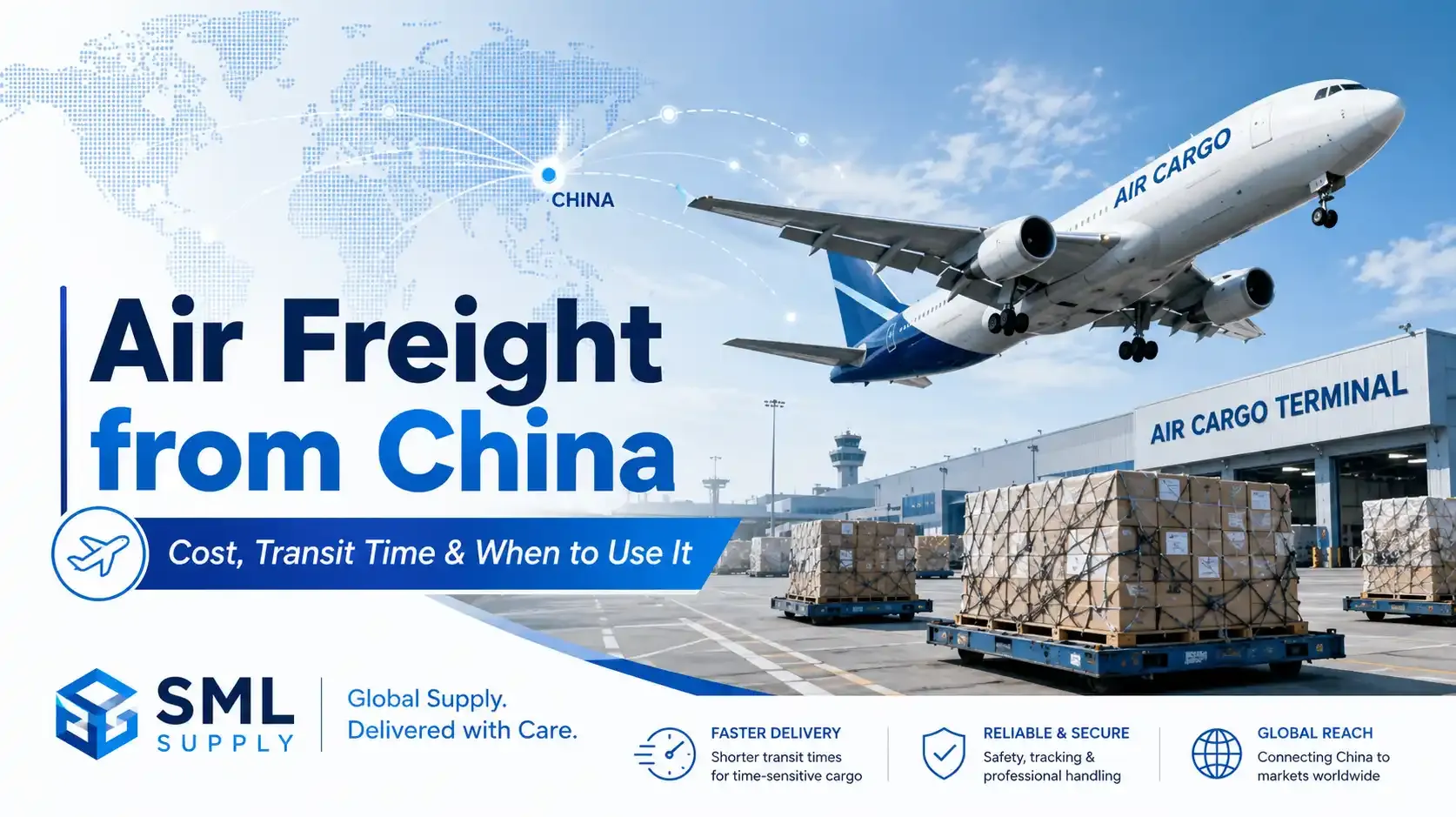
Air Freight from China: Cost, Transit Time & When to Use It
Learn how air freight from China works, including costs, chargeable weight, transit time, shipping process, documents and when importers should use air instead of sea freight.
Author: Connor Ma, Founder of SML Supply
Published by: SML Supply
Introduction
Air freight is one of the fastest ways to transport commercial goods from China to international markets.
For importers, however, faster transportation usually comes with a higher cost.
This means air freight is not automatically the best choice simply because it can move goods more quickly. Buyers need to consider product value, shipment weight, carton dimensions, delivery deadlines, inventory requirements and the total logistics cost.
Air freight can be particularly useful for:
- Urgent inventory replenishment
- Higher-value products
- Relatively lightweight cargo
- Product launches
- Seasonal orders with tight deadlines
- Production components needed urgently
- Commercial shipments that are too large for ordinary courier services but do not justify waiting for sea freight
Air cargo pricing also works differently from sea freight. Airlines and freight providers may calculate freight using actual weight or volumetric weight, with the applicable charge based on the shipment's chargeable weight.
This guide explains how air freight from China works, what affects the cost, how chargeable weight is calculated, what documents may be required and when international buyers should choose air freight instead of other shipping methods.
What Is Air Freight from China?
Air freight is the transportation of commercial cargo from China to another country using airline cargo networks.
Depending on the shipment and service, goods may travel:
- In dedicated cargo aircraft
- In the cargo hold of passenger aircraft
- Through direct flights
- Through connecting air cargo routes
The shipment normally passes through several stages rather than moving directly from the supplier's factory to the buyer.
A typical process may include:
- Goods collected from the supplier
- Delivery to a freight forwarder or cargo facility
- Cargo inspection and documentation
- Export customs procedures
- Airport cargo handling
- Flight transportation
- Destination airport handling
- Import customs clearance
- Final delivery
IATA describes air cargo handling as a process covering the movement of goods from delivery at the origin airport cargo facility through loading, transportation, unloading and handover at the destination.
This means importers should compare the complete logistics service rather than looking only at the flight itself.
When Should Importers Use Air Freight?
Air freight makes the most sense when the commercial value of faster transportation is greater than the additional freight cost.
Urgent Inventory Replenishment
Imagine a retailer has a product selling faster than expected.
The next sea freight shipment may not arrive soon enough to prevent stockouts.
Instead of waiting, the importer may send part of the production quantity by air and ship the remaining quantity by sea.
This can help maintain inventory while controlling overall logistics costs.
Higher-Value Products
Air freight can be more practical for products with relatively high value but limited size and weight.
When transportation represents only a small percentage of the final product value, the additional freight cost may be acceptable.
Product Launches
A buyer preparing for a product launch may have a fixed deadline.
If production finishes later than expected, air freight can sometimes help recover part of the lost time.
Seasonal Products
Christmas products, promotional goods, event merchandise and other seasonal products can lose much of their commercial value if they arrive after the selling period.
In these situations, the cost of missing the sales window may be greater than the cost of air freight.
Urgent Production Components
Manufacturers sometimes need replacement components, accessories or materials quickly to avoid stopping production.
Small but critical shipments are often suitable for air transportation.
When Is Air Freight Usually Not the Best Choice?
Air freight is generally less suitable for:
- Very bulky products
- Heavy low-value products
- Large-volume general merchandise
- Orders without urgent deadlines
- Products with low margins
- Cargo that faces significant air transport restrictions
For example, large quantities of towels, storage products, gift bags or other bulky consumer goods may occupy substantial cargo volume even when their actual weight is relatively low.
This can make air freight expensive because shipment dimensions affect chargeable weight.
How Is Air Freight Cost Calculated?
Unlike many buyers initially expect, air freight is not always calculated using only the number of kilograms shown on a scale.
Cargo pricing can consider both:
Actual weight
and
Volumetric weight
The higher applicable weight may become the shipment's chargeable weight. IATA explains that air carriers can price cargo using actual or volumetric weight and that weight and volume are key factors in air freight pricing.
This is one of the most important concepts for importers to understand.
What Is Actual Weight?
Actual weight is the physical gross weight of the shipment.
For example:
100 cartons weighing 8 kg each:
100 × 8 kg = 800 kg actual gross weight
If the shipment is relatively compact, actual weight may be the main factor used when determining the freight charge.
What Is Volumetric Weight?
Volumetric weight represents the amount of aircraft cargo space occupied by a shipment relative to its physical weight.
This matters because aircraft capacity is limited by both weight and available space.
A carton can therefore be very light but still expensive to transport if it occupies a large amount of cargo space.
A commonly encountered air cargo calculation expresses volumetric weight using carton dimensions and an applicable dimensional factor. The exact factor and calculation should be confirmed with the carrier or freight forwarder because tariff and service rules can vary.
Example of Volumetric Weight
Suppose one carton measures:
60 × 50 × 40 cm
and weighs:
12 kg
Its physical volume is:
60 × 50 × 40 = 120,000 cubic centimeters.
Depending on the dimensional factor applied by the freight service, the resulting volumetric weight may be higher than the carton's 12 kg actual weight.
If this happens, the freight may be calculated according to the higher volumetric figure.
This is why packaging design can have a major impact on air freight costs.
Why Packaging Matters More for Air Freight
Reducing unnecessary carton volume can directly improve shipping efficiency.
Importers should review:
- Carton dimensions
- Empty space inside cartons
- Inner packaging
- Product folding
- Number of units per carton
- Protective packaging
- Outer carton strength
However, reducing packaging should never compromise product protection.
A carton that is smaller but unable to protect the goods may result in damaged products and a higher overall cost.
The goal is efficient packaging, not simply smaller packaging.
What Determines Air Freight Rates from China?
Air freight quotations can vary substantially between shipments.
Several factors can influence the final cost.
1. Chargeable Weight
Larger chargeable weight usually affects the freight quotation directly.
Air freight providers often use weight breaks, so the rate structure may change as shipment size increases.
2. Origin Airport
China has several major air cargo gateways.
The most practical airport depends on:
- Supplier location
- Available flight routes
- Cargo type
- Freight rates
- Delivery schedule
Moving goods a long distance inside China to reach a particular airport can add unnecessary domestic transportation costs.
3. Destination Airport
Different destinations have different flight capacity, cargo demand and local handling costs.
A major international cargo hub may provide more service options than a smaller regional airport.
4. Direct vs Connecting Flights
Direct transportation can offer advantages when delivery time is important.
Connecting services may sometimes be cheaper but can involve additional handling and longer transit.
Importers should compare both price and total expected delivery time.
5. Seasonal Demand
Freight rates can change when cargo demand increases.
Peak periods may be influenced by:
- Holiday seasons
- Major product launches
- E-commerce demand
- Factory production cycles
- Limited aircraft capacity
For time-sensitive shipments, freight planning should start before production is completed.
6. Cargo Type
Standard general cargo is normally easier to transport than goods requiring special handling or regulatory procedures.
Products containing batteries, certain liquids, chemicals or other regulated materials may require additional documentation, packaging, labeling or transport conditions.
Air Freight Cost Is More Than the Airline Rate
An importer should not evaluate a quotation using only the airport-to-airport freight rate.
The complete cost can include:
- Supplier pickup
- China domestic trucking
- Export handling
- Warehouse charges
- Security screening
- Customs declaration
- Airport handling
- Air freight
- Fuel or service surcharges
- Destination handling
- Customs brokerage
- Import duties and taxes
- Final delivery
Always ask what is included in the freight quotation.
A low headline air freight rate does not necessarily mean the lowest total landed shipping cost.
Airport-to-Airport vs Door-to-Door Air Freight
Not all air freight quotations provide the same service.
This is another area where importers can become confused.
Airport-to-Airport
The freight provider transports cargo from the origin airport to the destination airport.
The buyer may still need to arrange:
- Origin pickup
- Export procedures
- Destination customs clearance
- Airport collection
- Final delivery
Door-to-Airport
The shipment is collected from the supplier or origin location and transported through to the destination airport.
The buyer handles the destination side.
Airport-to-Door
The cargo starts at the origin airport, while the logistics provider arranges transportation after arrival to the agreed destination.
Door-to-Door
A door-to-door service coordinates more of the shipment from the Chinese supplier or warehouse through to the buyer's agreed delivery point.
However, importers should still confirm:
- Whether customs clearance is included
- Whether duties and taxes are included
- Whether delivery surcharges apply
- Which party is the importer of record where applicable
- What happens if customs requests additional documents
Never assume that the word "door-to-door" automatically includes every possible charge.
How Long Does Air Freight from China Take?
Air freight is faster than ocean shipping, but the total shipment time includes much more than the flight duration.
The complete process may involve:
- Supplier pickup
- Cargo warehouse receiving
- Export preparation
- Security screening
- Flight booking
- Customs declaration
- Airport handling
- Flight transportation
- Destination handling
- Import clearance
- Final delivery
A quotation describing only flight or airport transit does not necessarily represent the total door-to-door delivery time.
Importers should therefore ask freight providers for an estimated total logistics timeline, not simply the scheduled flight time.
Why Can Air Freight Be Delayed?
Although air freight is fast, delays can still occur.
Common causes include:
- Flight capacity changes
- Cargo offloading
- Connecting flight delays
- Customs inspections
- Incorrect documentation
- Restricted cargo
- Peak-season congestion
- Weather
- Supplier production delays
- Missing consignee information
- Destination clearance issues
Urgent shipping should therefore still include some time buffer.
What Documents Are Used for Air Freight?
Documentation depends on the shipment, product and destination.
Typical commercial shipments may involve:
Commercial Invoice
The commercial invoice normally includes information such as:
- Seller
- Buyer
- Product description
- Quantity
- Unit price
- Total value
- Trade terms
Packing List
The packing list may include:
- Number of cartons
- Product quantity
- Gross weight
- Net weight
- Carton dimensions
- Total cargo information
Air Waybill
The Air Waybill, commonly abbreviated as AWB, is a key air cargo transport document.
IATA describes the AWB as the contract of carriage between the shipper and the airline carrier. Electronic Air Waybills are also widely used within air cargo processes.
Customs Documents
Export and import customs documentation depends on the countries and products involved.
Importers should confirm destination requirements before shipping.
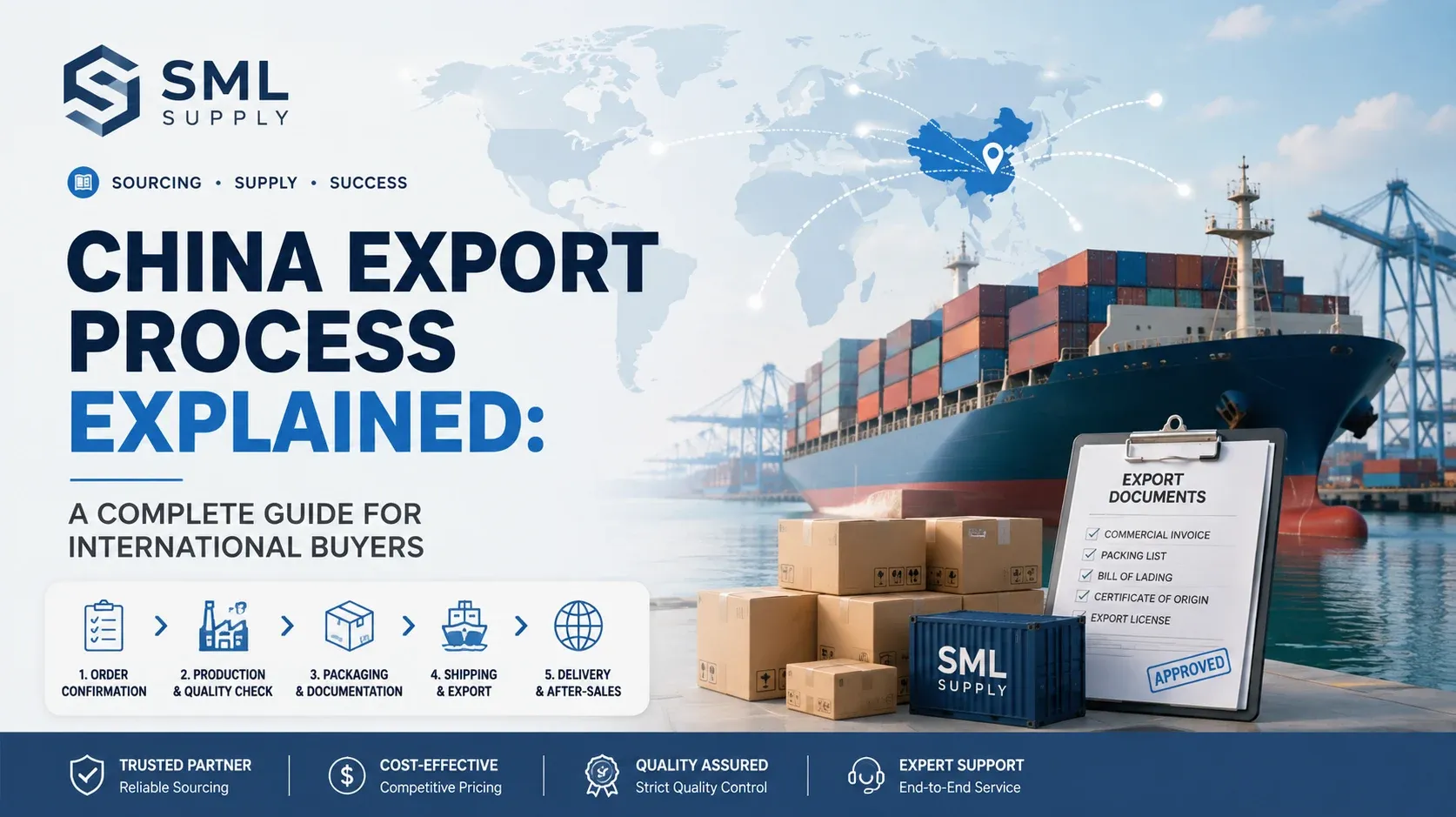
For a broader explanation of the China export process, read our China Export Process Explained guide.
What Is a Master Air Waybill and House Air Waybill?
Importers working with freight forwarders may encounter two terms:
MAWB — Master Air Waybill
The Master Air Waybill generally relates to transportation between the airline and the freight forwarder or contracting shipper.
HAWB — House Air Waybill
A freight forwarder may issue a House Air Waybill for an individual customer's shipment when cargo is handled through a forwarding arrangement.
The exact documentation structure depends on how the freight is booked.
Buyers do not need to become air cargo documentation specialists, but they should understand which document refers to their shipment and confirm that consignee and shipment information is correct.
Can Products With Batteries Be Shipped by Air?
Some battery-powered products can be transported by air, but batteries are subject to specific dangerous goods requirements.
Lithium batteries are classified as dangerous goods for air transport, and applicable rules can affect classification, packaging, marking, labeling, documentation and whether a shipment can travel on particular aircraft or services. IATA maintains dedicated Dangerous Goods Regulations and battery guidance for air cargo.
Products that may require additional attention include:
- Power banks
- Rechargeable electronics
- Battery-powered toys
- Cameras
- Electronic accessories
- Products containing lithium cells
- Spare batteries
Importers should tell their freight forwarder exactly what batteries the product contains before booking transportation.
Do not describe battery products simply as "electronics" or "general cargo" if regulated batteries are present.
Accurate cargo information is essential for safety and compliance.
What Other Products May Require Special Attention?
Air transport restrictions can also apply to products such as:
- Certain liquids
- Aerosols
- Chemicals
- Flammable products
- Magnetic materials
- Compressed gases
- Powders
- Dangerous goods
- Certain cosmetics or personal-care products
Whether a product can travel as standard cargo depends on its actual composition and classification.
Importers should provide accurate product information and, where required, supporting documents to the freight provider.
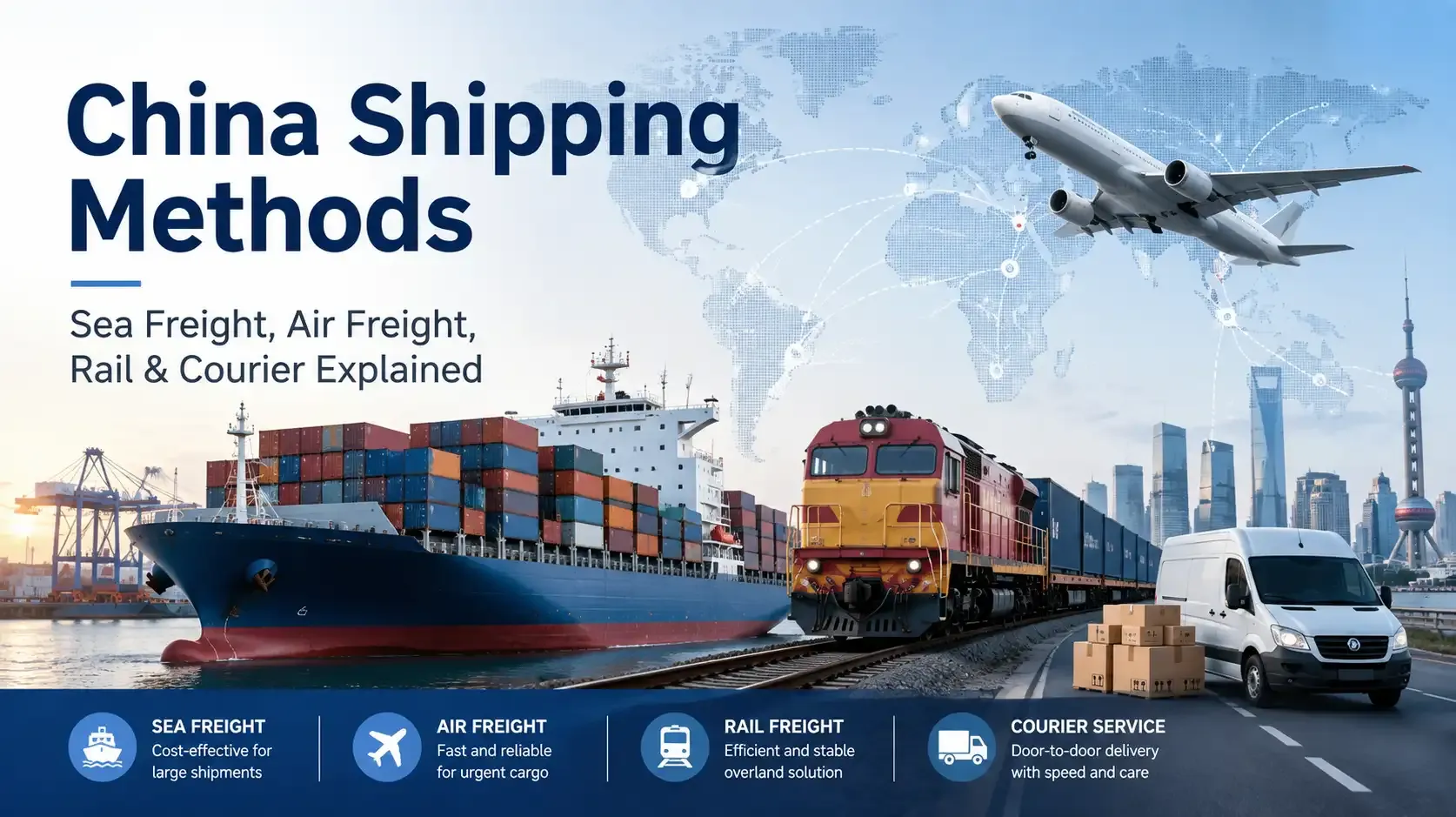
Air Freight vs Express Courier
Buyers sometimes use "air freight" and "courier" as if they mean the same thing.
They are related but are not identical services.
Express Courier
Services such as international express delivery are commonly used for:
- Samples
- Documents
- Very small orders
- Replacement parts
- Urgent parcels
Courier networks usually provide highly integrated door-to-door handling.
Air Freight
Traditional air freight is commonly used for larger commercial cargo.
It may involve:
- Freight forwarders
- Airline cargo bookings
- Airport cargo terminals
- Separate customs arrangements
- Independent destination delivery
As shipment size increases, air freight may become more appropriate than express courier.
However, the buyer should compare actual quotations rather than assume one option is always cheaper.
Air Freight vs Sea Freight
The choice between air and sea freight depends on the commercial requirements of the shipment.
Factor | Air Freight | Sea Freight |
|---|---|---|
Transportation speed | Faster | Slower |
Cost | Higher | Usually lower for larger shipments |
Bulky products | Often expensive | Usually more suitable |
Urgent inventory | Suitable | Less suitable |
Large wholesale orders | Can be expensive | Often suitable |
Higher-value lightweight goods | Often suitable | Also possible |
Cargo capacity | More limited | Very high |
Neither method is universally better.
Air freight solves a time problem.
Sea freight usually solves a cost and volume problem.
For a detailed explanation of ocean shipping, including FCL, LCL, CBM and container planning, read our Sea Freight from China guide.
A Practical Strategy: Combine Air and Sea Freight
Importers do not always need to choose only one transportation method for an entire production order.
Suppose a buyer produces 10,000 units.
Inventory is urgently needed, but shipping all 10,000 units by air would be too expensive.
One possible strategy is:
1,000 units by air freight
and
9,000 units by sea freight
The air shipment helps replenish inventory quickly.
The larger sea shipment follows at a lower transportation cost.
This strategy can be useful when:
- Stock is running low
- Production is delayed
- A launch deadline is approaching
- Demand unexpectedly increases
- Only part of the order is urgently required
The correct split depends on product margin, inventory levels and shipping costs.
How to Reduce Air Freight Costs
Importers can often improve air freight efficiency through better planning.
Optimize Carton Dimensions
Avoid unnecessary empty space while maintaining adequate protection.
Confirm Packing Information Early
Ask suppliers for:
- Carton dimensions
- Carton quantity
- Gross weight
- Total volume
before requesting final freight quotations.
Compare More Than One Shipping Option
Compare:
- Express courier
- Standard air freight
- Different flight schedules
- Sea freight where timing permits
Avoid Last-Minute Shipping When Possible
Urgent shipments reduce the buyer's ability to compare options.
Consolidate Suppliers When Practical
Products from several suppliers may sometimes be collected into one shipment.
However, consolidation should be evaluated carefully because waiting for one delayed supplier can affect the entire shipment.
Can Products From Multiple Chinese Suppliers Be Consolidated for Air Freight?
Yes, depending on the products and logistics arrangement.
For example, a buyer purchasing from three suppliers may arrange for all goods to be delivered to one warehouse before air shipment.
This can help coordinate:
- Carton information
- Shipment quantities
- Export documentation
- Pickup schedules
- Freight booking
However, products with different regulatory requirements may need separate handling.
For example, standard textile products and battery-containing electronics may not necessarily follow the same cargo process.
The freight forwarder should review the final cargo list before shipment.
Quality Control Before Air Freight
Air freight is expensive.
Shipping defective goods quickly does not solve a quality problem.
Before dispatch, importers should confirm:
- Product quantity
- Product specifications
- Workmanship
- Packaging
- Labels
- Carton marks
- Carton quantities
- Accessories
- Barcodes where required
When an order is time-sensitive, buyers sometimes feel pressure to skip inspection to save one or two days.
This can create a much larger problem if incorrect or defective products arrive overseas.
Shipping speed should not replace basic quality control.
Common Air Freight Mistakes Importers Should Avoid
Mistake 1: Comparing Freight Using Actual Weight Only
A lightweight but bulky shipment may be charged according to a higher volumetric weight.
Always provide carton dimensions when requesting quotations.
Mistake 2: Asking for Freight Prices Before Packaging Is Confirmed
Without accurate carton size, quantity and weight, a freight quotation may only be an estimate.
Mistake 3: Looking Only at the Airport-to-Airport Rate
Origin charges, destination charges, customs clearance and delivery can materially change the final cost.
Mistake 4: Not Declaring Batteries or Restricted Products
Incorrect cargo descriptions can create serious safety and compliance problems.
Mistake 5: Assuming Air Freight Means Immediate Delivery
Warehouse handling, export customs, flight availability and import clearance still require time.
Mistake 6: Shipping an Entire Order by Air Without Calculating the Commercial Impact
Sometimes only a small portion of the order is urgently required.
A combined air-and-sea strategy may be more economical.
Mistake 7: Ignoring Packaging Efficiency
Unnecessarily large cartons can increase chargeable weight and freight cost.
What Information Should You Give a Freight Forwarder?
To receive a useful air freight quotation, provide accurate shipment information.
This normally includes:
- Product name
- Product description
- Number of cartons
- Carton dimensions
- Gross weight
- Supplier location
- Destination
- Required delivery timing
- Battery information if applicable
- Dangerous goods information if applicable
- Preferred service type
The more accurate the information, the easier it is to compare logistics options.
How SML Supply Supports Air Freight Shipments
SML Supply works with international B2B buyers sourcing products from China.
Our role can include coordinating the steps that happen before goods are handed over for international transportation.
Depending on the project, this may include:
Supplier Coordination
We can coordinate with suppliers regarding:
- Production completion
- Packaging
- Carton quantities
- Carton dimensions
- Gross weight
- Collection schedules
Quality Control
Products can be checked before shipment to reduce the risk of paying for fast transportation only to receive incorrect or defective goods.
Supplier Consolidation
Where practical, products from different suppliers can be coordinated for combined shipment.
Export Preparation
Shipment information and supplier schedules can be organized before the cargo is handed over to the logistics provider.
Logistics Coordination
We can assist buyers in coordinating freight arrangements with the relevant logistics providers depending on the sourcing project.
Frequently Asked Questions
Is Air Freight From China Faster Than Sea Freight?
Yes. Air freight generally provides much faster international transportation, although the complete delivery time also includes pickup, export handling, customs clearance and final delivery.
Is Air Freight Expensive?
Air freight normally costs more than sea freight, particularly for heavy or bulky shipments.
Whether it is commercially reasonable depends on product value, margins, urgency and cargo dimensions.
How Is Air Freight Charged?
Air cargo charges may be based on chargeable weight, considering actual and volumetric weight.
Buyers should provide both shipment weight and carton dimensions when requesting a quotation.
What Is Volumetric Weight?
Volumetric weight represents the amount of cargo space a shipment occupies relative to its physical weight.
Bulky lightweight products can therefore cost more to transport than buyers expect.
What Is an Air Waybill?
An Air Waybill is an important air cargo document and forms part of the contract of carriage between the shipper and airline carrier.
Can Lithium Battery Products Be Shipped by Air?
Some can, but lithium batteries are regulated as dangerous goods and must comply with applicable air transport requirements. The exact requirements depend on battery type, configuration, quantity and shipment conditions.
Should I Use Air Freight or Courier?
Courier is often practical for samples and small urgent parcels, while conventional air freight can be more appropriate for larger commercial shipments.
Always compare actual quotations.
Should I Use Air Freight or Sea Freight?
Use air freight when time is especially important and the additional transportation cost is commercially justified.
For larger or less urgent shipments, sea freight is usually more economical.
Can I Ship Part of an Order by Air and the Rest by Sea?
Yes.
This can be an effective inventory strategy when some products are urgently required but shipping the entire order by air would be too expensive.
Can SML Supply Help Coordinate Air Freight From China?
SML Supply can assist with supplier coordination, quality control, consolidation, export preparation and logistics coordination depending on the sourcing project.
Final Thoughts
Air freight from China can be an effective logistics solution when speed matters.
But the fastest transportation method is not automatically the best commercial option.
Importers should consider:
- Actual weight
- Volumetric weight
- Carton dimensions
- Product value
- Delivery deadlines
- Cargo restrictions
- Origin and destination charges
- Customs procedures
- Final delivery costs
For urgent, relatively lightweight or higher-value products, air freight can help reduce inventory delays and support time-sensitive sales.
For larger, bulkier or less urgent shipments, sea freight is often more economical.
In some situations, the best strategy is to combine both methods: send the urgent quantity by air and the remaining production by sea.
Good shipping decisions begin before the goods leave the factory.
If you need help coordinating suppliers, quality control, consolidation or export preparation in China, contact SML Supply to discuss your sourcing requirements.