Oct 26, 2026Import & Shipping Guide
FOB vs CIF vs EXW: Which Shipping Term Should Importers Choose?
Compare FOB, CIF and EXW when importing from China, including buyer and seller responsibilities, shipping costs, risks and which term suits different importers.
Author: Connor Ma, Founder of SML Supply
Published by: SML Supply
Introduction
When importing products from China, buyers frequently receive quotations marked EXW, FOB or CIF.
The product itself may be exactly the same, but the quotation can look very different depending on which trade term is used.
A supplier might quote:
- EXW Yiwu
- FOB Ningbo
- FOB Shanghai
- CIF Hamburg
- CIF Los Angeles
For an international buyer, understanding these terms is important because they affect who handles transportation, export procedures, freight arrangements, insurance and certain costs during the shipment.
EXW, FOB and CIF are part of the Incoterms® rules published by the International Chamber of Commerce. Incoterms clarify how certain costs, tasks and risks are divided between buyers and sellers in international sales transactions.
However, Incoterms should not be treated as a complete sales contract. Buyers still need to agree separately on matters such as product specifications, payment terms, inspection requirements, delivery dates and other commercial conditions.
This guide explains the practical differences between EXW, FOB and CIF when sourcing products from China and helps importers understand which term may be more suitable for different purchasing situations.
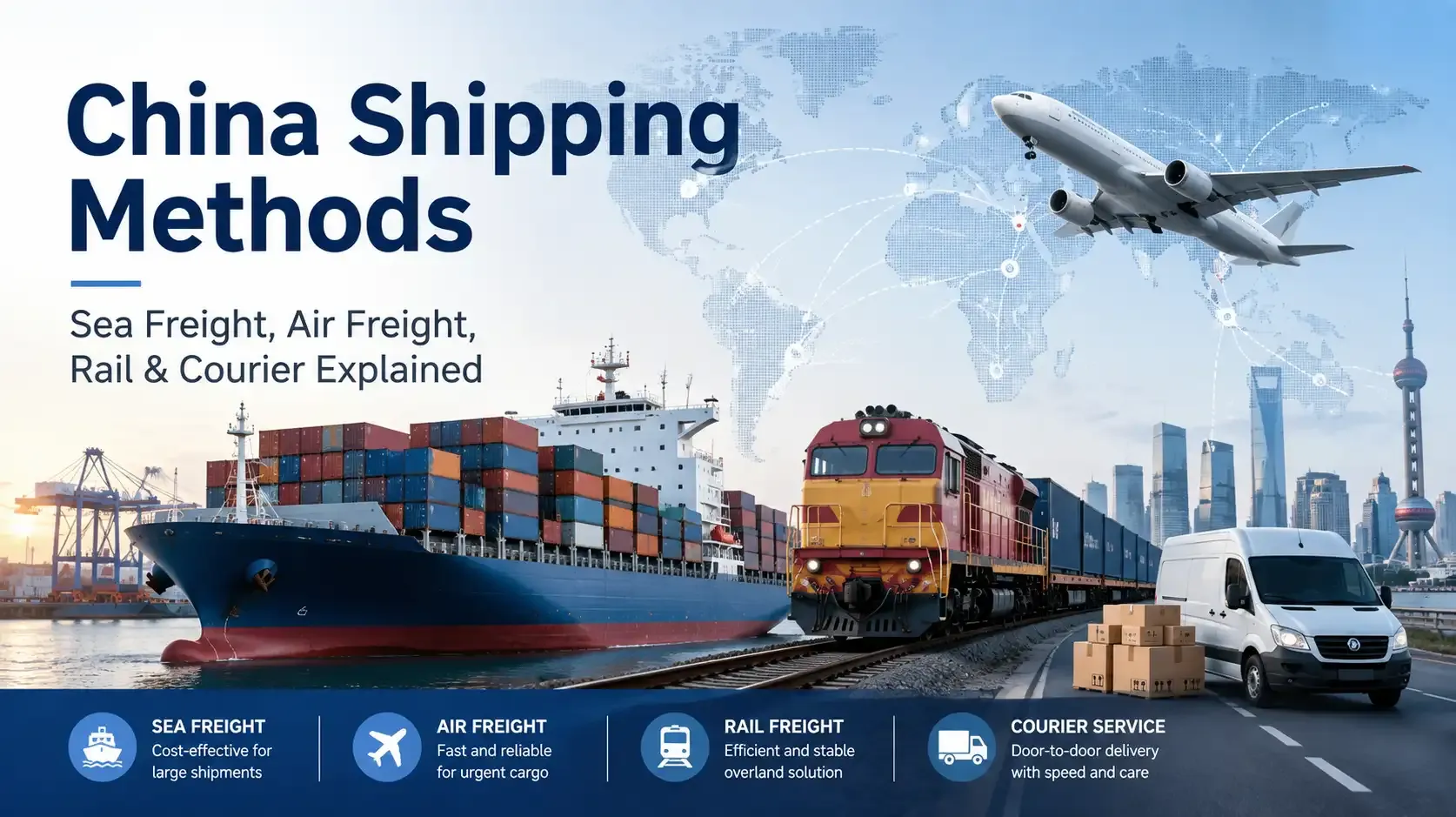
If you are still comparing transportation options, our China Shipping Methods guide explains sea freight, air freight, rail freight and courier shipping in more detail.
What Do EXW, FOB and CIF Mean?
The three terms represent different divisions of responsibility between the seller and buyer.
In simplified terms:
EXW: The buyer takes responsibility very early, usually from the seller's premises.
FOB: The seller handles the goods through export and delivers them on board the nominated vessel at the agreed port.
CIF: The seller arranges ocean freight and required insurance to the named destination port, although the point where risk transfers is different from the point to which the seller pays freight.
That final point is especially important.
Many first-time importers assume that because the seller pays freight under CIF, the seller also carries the transportation risk until the destination port.
That is not how CIF works under Incoterms® 2020. CIF is a sea and inland waterway rule, and the seller's delivery/risk point is associated with the goods being placed on board the vessel at the port of shipment, while the seller contracts and pays for carriage to the named destination port and provides the required insurance.
Understanding the difference between cost responsibility and risk transfer is therefore essential.
What Is EXW?
EXW means Ex Works.
Under EXW, the seller normally makes the goods available to the buyer at an agreed location, often the supplier's factory or warehouse.
The seller's responsibility is relatively limited compared with FOB or CIF.
Under the EXW rule, the goods are generally delivered when they are placed at the buyer's disposal at the named place, ready for collection. Loading onto the buyer's collecting vehicle is normally at the buyer's risk and expense.
For example:
EXW Yiwu, China
means the buyer takes responsibility for arranging the logistics from the agreed location in Yiwu.
What Does the Seller Usually Handle Under EXW?
The seller normally handles:
- Manufacturing the products
- Product packaging
- Preparing the goods for collection
- Making the goods available at the agreed location
What Does the Buyer Usually Handle Under EXW?
The buyer may need to arrange:
- Pickup from the supplier
- Loading arrangements
- Domestic transportation in China
- Export procedures
- Export documentation coordination
- Freight forwarding
- International transportation
- Import customs clearance
- Duties and taxes
- Final delivery
This gives the buyer greater control over logistics, but it also creates more responsibility.
Advantages of EXW
Greater Logistics Control
Experienced importers may prefer to manage the shipment through their own freight forwarder.
This makes it easier to compare logistics providers and coordinate several suppliers.
Easier Comparison of Product Costs
EXW can help buyers understand the supplier's factory-level product price before international logistics costs are added.
Useful for Supplier Consolidation
If a buyer purchases products from several factories, EXW quotations can sometimes work well with a centralized consolidation strategy.
For example, a buyer may purchase:
- Towels from one supplier
- Gift bags from another
- Kitchen products from another
- Promotional products from another
The buyer or sourcing partner can arrange collection and bring the products together before export.
Disadvantages of EXW
EXW can create significant work for inexperienced importers.
The buyer may need local support in China to coordinate:
- Factory pickup
- Trucking
- Export procedures
- Warehouse delivery
- Supplier communication
- Shipping documents
A quotation that looks inexpensive at the EXW stage can become much more expensive after all logistics costs are included.
This is why buyers should not compare:
EXW price from Supplier A
directly against:
FOB price from Supplier B
without adjusting for the different responsibilities included in each quotation.
When Is EXW Suitable?
EXW may be suitable when:
- You already have a freight forwarder in China
- You understand Chinese export logistics
- You purchase from multiple suppliers
- You want to consolidate several orders
- You want more control over the logistics process
- You have a sourcing company or local team coordinating the shipment
For a first-time importer without logistics support, EXW may create more complexity than expected.
What Is FOB?
FOB means Free On Board.
FOB is commonly seen in quotations from Chinese exporters.
Under FOB, the seller handles more of the export process than under EXW.
FOB is one of the Incoterms® rules specifically intended for sea and inland waterway transportation. Under the rule, delivery occurs when the goods are on board the vessel nominated by the buyer at the named port of shipment.
For example:
FOB Ningbo
means the seller agrees to handle the goods through the agreed FOB delivery point at Ningbo port according to the sales agreement.
What Does the Seller Usually Handle Under FOB?
The seller generally handles responsibilities such as:
- Product manufacturing
- Packaging
- Transportation to the agreed port
- Export customs procedures
- Relevant export documentation
- Origin-side handling required under the agreed FOB arrangement
- Delivery of the goods on board the nominated vessel
Once the goods have been delivered on board according to FOB, the relevant risk transfers to the buyer.
What Does the Buyer Usually Handle Under FOB?
The buyer generally handles:
- Selecting or coordinating the main carrier
- Main international freight
- Cargo insurance if desired
- Destination port procedures
- Import customs clearance
- Import duties and taxes
- Final inland delivery
This division of responsibilities is one reason FOB has traditionally been popular in international trade.
Why Do Many Importers Use FOB?
FOB can provide a practical balance between supplier responsibility and buyer control.
The supplier handles the Chinese export side, while the buyer retains control over the main international transportation.
For established importers, this can make freight costs more transparent.
Instead of relying entirely on the supplier's freight arrangement, the buyer can request freight quotations from its own forwarder.
Advantages of FOB
The Supplier Handles Export Procedures
Compared with EXW, the buyer normally does not need to personally coordinate every step of the Chinese export process.
The Buyer Controls Main Freight
The importer can choose its own freight forwarder or carrier and compare international shipping costs.
Easier Cost Comparison
FOB quotations can make it easier to compare suppliers when they are quoting on the same basis and from the same port.
Suitable for Regular Importers
Buyers who import frequently often want visibility over their international logistics costs rather than relying completely on supplier-arranged shipping.
Disadvantages of FOB
FOB still requires the buyer to understand international freight.
The buyer needs to coordinate:
- Freight booking
- Shipping instructions
- Destination charges
- Customs clearance
- Final delivery
Buyers should also confirm the exact named port.
For example:
FOB Ningbo
and
FOB Shenzhen
may involve different inland transportation costs for the supplier.
An Important Note About FOB and Containerized Cargo
Although FOB is extremely common in commercial quotations, importers should understand an important technical point.
ICC guidance has noted that FOB is not normally the preferred rule for containerized cargo when the seller hands the container to a carrier or terminal before it is actually loaded on board the vessel. In such situations, FCA may better reflect the physical delivery process.
This does not mean buyers will stop seeing FOB quotations from Chinese suppliers.
FOB remains widely used in everyday international trade discussions.
However, professional buyers should understand the difference between commercial habit and the precise Incoterms® rule.
For important transactions, the chosen Incoterm and named place or port should be clearly written into the sales contract.
What Is CIF?
CIF means Cost, Insurance and Freight.
CIF is also specifically designed for sea and inland waterway transportation.
Under CIF, the seller arranges and pays for transportation to the named destination port and also obtains the insurance required under the CIF rule.
For example:
CIF Hamburg
means the seller arranges ocean freight to Hamburg and provides the required insurance according to the agreed CIF terms.
This can appear convenient because the buyer does not need to arrange the main ocean freight independently.
However, buyers need to understand exactly what is and is not included.
What Does the Seller Usually Handle Under CIF?
The seller generally handles:
- Product manufacturing
- Packaging
- Chinese inland transportation
- Export procedures
- Delivery on board the vessel
- Ocean freight to the named destination port
- Required cargo insurance under the CIF rule
What Does the Buyer Usually Handle Under CIF?
The buyer generally remains responsible for matters such as:
- Import customs clearance
- Import duties and taxes
- Certain destination charges
- Inland transportation after arrival
- Final delivery
The exact costs need to be checked carefully in the quotation and shipping documentation.
CIF Does Not Mean Door-to-Door Delivery
This is one of the most common misunderstandings among new importers.
If a supplier offers:
CIF Los Angeles
that does not automatically mean the goods will be delivered to the buyer's warehouse in Los Angeles.
The named destination under CIF is generally the destination port.
The importer still needs to understand what happens after the cargo arrives.
Possible additional costs can include:
- Destination terminal charges
- Customs clearance
- Duties
- Taxes
- Documentation fees
- Port-related charges
- Truck delivery
- Warehouse delivery
Before accepting a CIF quotation, buyers should therefore ask what costs remain payable at destination.
Advantages of CIF
Supplier Arranges Main Ocean Freight
This can simplify the process for buyers who do not yet have their own shipping arrangements.
Easier for Some First-Time Importers
The buyer does not have to organize the main ocean freight booking independently.
Freight Cost Is Included in the Seller's Quotation
This may make initial budgeting easier.
However, buyers should still investigate destination charges before comparing the total cost.
Disadvantages of CIF
Less Control Over Freight Selection
The seller normally selects or arranges the transportation.
The cheapest logistics option for the seller may not always be the best logistics solution for the buyer.
Destination Charges Can Be Misunderstood
A low CIF quotation can appear attractive until the buyer learns about charges payable after the cargo reaches the destination.
Freight Cost Is Less Transparent
Because the product and freight are combined into the seller's quotation, buyers may have less visibility into the actual transportation cost.
EXW vs FOB vs CIF: Quick Comparison
Factor | EXW | FOB | CIF |
|---|---|---|---|
Seller prepares goods | Yes | Yes | Yes |
Seller handles Chinese export side | Limited | Yes | Yes |
Seller arranges main ocean freight | No | No | Yes |
Seller provides CIF-required insurance | No | No | Yes |
Buyer controls main freight | Yes | Yes | Generally no |
Buyer handles import clearance | Yes | Yes | Yes |
Best suited to sea-only rule | No | Yes | Yes |
Buyer logistics responsibility | High | Medium | Lower before destination |
The table is useful as a general comparison, but buyers should always refer to the exact named place or port and the agreed Incoterms® rule in the contract.
EXW vs FOB: Which Is Better?
For many international buyers sourcing from China, the practical choice often comes down to EXW versus FOB.
Choose EXW When You Want Maximum Control
EXW can work well if:
- You have a trusted freight forwarder
- You have staff or a sourcing partner in China
- You buy from multiple suppliers
- You consolidate shipments
- You can manage export logistics efficiently
Choose FOB When You Want the Supplier to Handle the Chinese Export Side
FOB may be more convenient if:
- The supplier is experienced in exporting
- You do not want to arrange local pickup yourself
- You want the supplier to handle export procedures
- You still want control over international freight
For many established B2B buyers, FOB can offer a practical middle ground.
FOB vs CIF: Which Is Better?
The main practical difference for many importers is who arranges the main sea transportation.
Under FOB, the buyer generally arranges the ocean freight.
Under CIF, the seller arranges and pays for the ocean freight to the named destination port and provides the required insurance.
FOB May Be Better When:
- You have your own freight forwarder
- You import regularly
- You want to negotiate freight independently
- You want better visibility over logistics costs
- You want more control over the shipping process
CIF May Be Better When:
- You are making an occasional shipment
- You do not yet have a freight forwarder
- The supplier has a competitive freight arrangement
- You clearly understand the destination charges
- You prefer the seller to organize the main ocean transportation
Neither term is automatically better.
The correct choice depends on the buyer's logistics capabilities and the actual quotations available.
EXW vs CIF: Why the Prices Can Look Very Different
An EXW quotation may look significantly cheaper than CIF.
That does not necessarily mean the supplier offering EXW has the better product price.
The CIF quotation can include several costs that the EXW quotation does not include.
For example:
EXW Quotation
Product value: included
Chinese pickup: not included
Export handling: not included
Ocean freight: not included
CIF insurance: not included
CIF Quotation
Product value: included
Chinese origin logistics: generally included as required to fulfill CIF
Export handling: included as required
Ocean freight: included
Required CIF insurance: included
Therefore, buyers should compare quotations on the same basis whenever possible.
Do Not Compare Supplier Quotations Using Different Incoterms
Suppose Supplier A quotes:
USD 4.80 EXW
while Supplier B quotes:
USD 5.10 FOB Ningbo
It would be incorrect to conclude immediately that Supplier A is cheaper.
You first need to determine the cost of moving Supplier A's products from the factory through the export process to the comparable FOB point.
Only then can you make a meaningful comparison.
The same principle applies when comparing FOB with CIF.
Professional sourcing decisions should focus on comparable total costs rather than the lowest number shown on the quotation.
How Incoterms Affect Landed Cost
The product price is only one part of importing.
Depending on the Incoterm and shipping arrangement, buyers may also need to consider:
- China inland transportation
- Export handling
- Freight forwarding
- Ocean freight
- Insurance
- Destination port fees
- Customs brokerage
- Import duties
- Import taxes
- Domestic trucking
- Warehousing
- Final delivery
The final commercial question is not simply:
What is the FOB price?
It is:
What will the product cost after it reaches the required destination?
This is the landed-cost perspective importers should use when comparing sourcing options.
Which Term Is Better for First-Time Importers?
There is no universal answer.
A first-time importer may initially find CIF easier because the supplier arranges the main sea freight.
However, convenience should not replace cost transparency.
Before accepting CIF, the buyer should understand:
- Destination charges
- Import clearance procedures
- Duties and taxes
- Final delivery arrangements
- Who the destination agent is
- Which costs remain unpaid
FOB may require slightly more coordination, but it can give the buyer more control over international freight.
EXW gives even greater logistics control but normally requires stronger local coordination in China.
Which Term Is Better for Experienced Importers?
More experienced importers often prefer greater control over logistics.
Depending on their supply chain, they may use EXW, FCA or FOB arrangements and appoint their own freight forwarders.
This can be particularly useful when:
- Purchasing from many suppliers
- Consolidating products
- Shipping regularly
- Negotiating annual freight rates
- Managing several destination markets
- Controlling warehouse schedules
The best arrangement depends on the buyer's logistics infrastructure.
Which Term Works Best When Buying From Multiple Chinese Suppliers?
When sourcing from several suppliers, coordinating each shipment separately can increase logistics costs.
For example, imagine a buyer purchases:
- 3 CBM from Supplier A
- 2 CBM from Supplier B
- 4 CBM from Supplier C
- 1 CBM from Supplier D
Instead of arranging four unrelated international shipments, the buyer may collect the products into one consolidation warehouse.
A consolidated shipment can then be prepared for export.
In this type of sourcing model, strong control over origin logistics can be valuable.
The buyer or sourcing partner needs to coordinate:
- Supplier completion dates
- Collection schedules
- Packing lists
- Carton quantities
- CBM
- Quality inspections
- Warehouse receiving
- Consolidation
- Export preparation
What Should Buyers Confirm Before Accepting an Incoterm?
Do not write only:
FOB
on a purchase order.
The named location matters.
For example:
FOB Ningbo
provides more information than simply saying FOB.
Buyers should clearly confirm:
- Incoterm
- Named place or port
- Applicable Incoterms® version
- Product price
- Freight inclusions
- Export charges
- Documentation
- Insurance responsibility
- Destination charges
- Customs responsibilities
Clear terms reduce misunderstandings between buyers, suppliers and logistics providers.
Incoterms Do Not Replace Product and Purchase Agreements
EXW, FOB and CIF primarily help allocate defined delivery responsibilities, costs and risks.
They do not replace important purchasing terms such as:
- Product specifications
- Approved samples
- Quality standards
- Inspection criteria
- Payment terms
- Production deadlines
- Packaging requirements
- Defect handling
- Warranty arrangements
For example, agreeing to FOB Ningbo does not tell the supplier what fabric quality, product dimensions or packaging standards you require.
These details still need to be clearly documented during sourcing and production.
Common Mistakes Buyers Make With EXW, FOB and CIF
Mistake 1: Choosing the Lowest Quoted Price
A lower EXW price may not result in a lower landed cost.
Always compare quotations on a consistent basis.
Mistake 2: Assuming CIF Is Door-to-Door
CIF is not automatically warehouse delivery.
Buyers need to understand destination costs and import procedures.
Mistake 3: Ignoring the Named Location
FOB Shanghai and FOB Ningbo are not identical arrangements.
The named port matters.
Mistake 4: Confusing Freight Payment With Risk Transfer
Who pays the freight and where risk transfers are not always the same.
CIF is the classic example.
Mistake 5: Letting the Supplier Choose Everything Without Comparison
Even when a supplier can arrange freight, buyers should periodically compare logistics quotations.
Mistake 6: Planning Logistics Only After Production
Shipping decisions should ideally begin before the goods are finished.
Packaging, carton volume, supplier location and consolidation can all affect the final logistics cost.
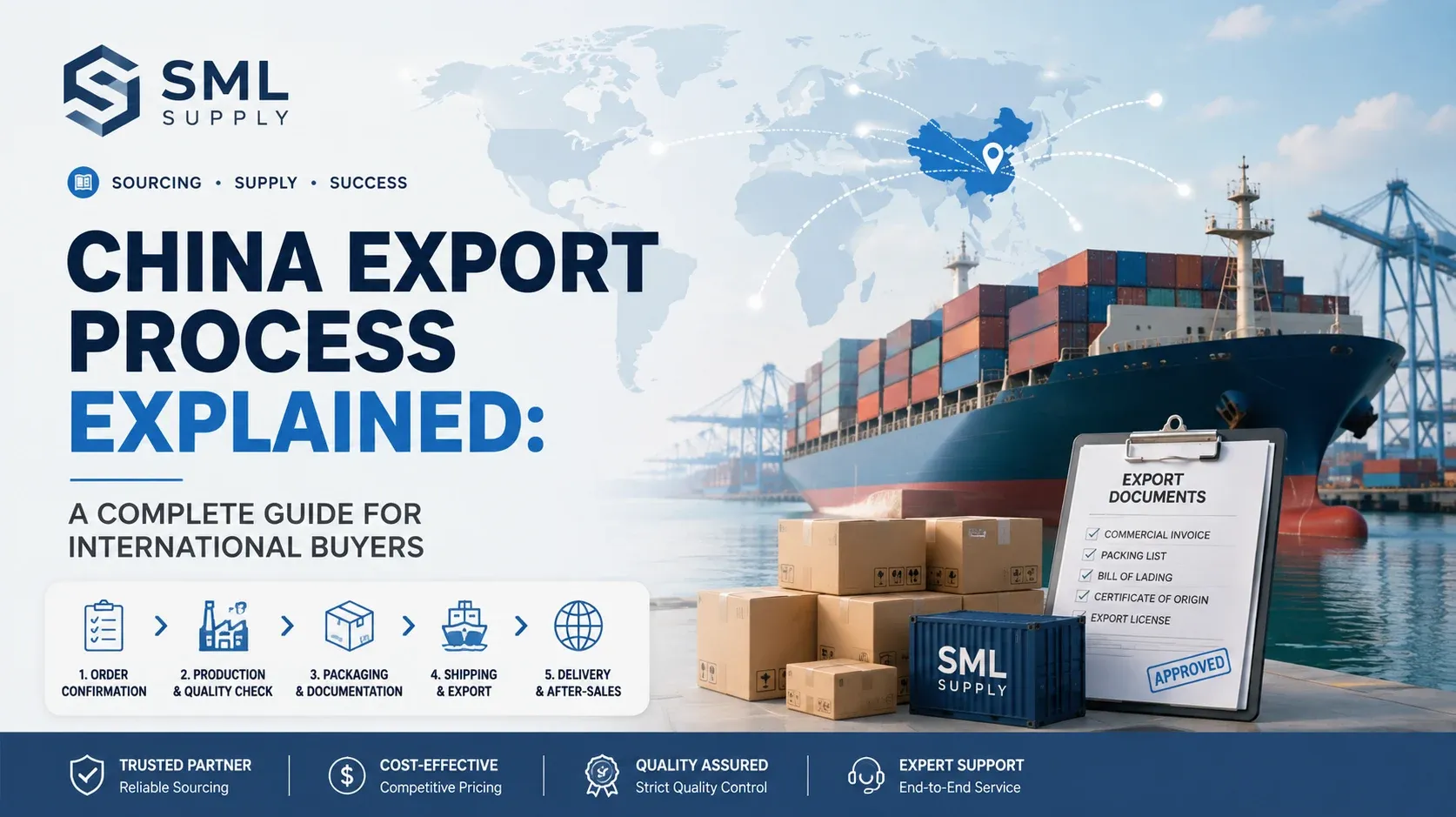
How Shipping Terms Connect With the China Export Process
Choosing an Incoterm is only one part of exporting goods from China.
A typical order may also involve:
- Supplier confirmation
- Production
- Quality inspection
- Packaging confirmation
- Export documentation
- Freight booking
- Chinese customs procedures
- International transportation
- Destination customs clearance
- Final delivery
Understanding the complete process helps buyers choose an Incoterm that matches their actual logistics capabilities.
How SML Supply Supports International Buyers
SML Supply works with B2B buyers sourcing products from China.
When a project involves multiple suppliers or product categories, the challenge is often not only finding the products.
The buyer may also need to coordinate:
- Supplier communication
- Production schedules
- Product inspection
- Packaging
- Carton information
- Consolidation
- Export preparation
- Shipping coordination
For buyers purchasing from several Chinese suppliers, having one party coordinate the origin side can simplify the process.
Our Export Support service can assist with supplier coordination, consolidation, quality control and export preparation depending on the project.
Frequently Asked Questions
What Does EXW Mean When Buying From China?
EXW means the seller makes the goods available at the agreed location, commonly the factory or warehouse, while the buyer takes on substantial responsibility for collection and onward logistics.
What Does FOB Mean When Importing From China?
FOB means the seller delivers the goods on board the nominated vessel at the agreed port of shipment and handles the export-side responsibilities required by the FOB rule.
What Does CIF Mean?
CIF means Cost, Insurance and Freight. The seller arranges and pays for ocean freight to the named destination port and provides the insurance required under CIF.
Is FOB Better Than EXW?
Not always.
FOB may be easier when the buyer wants the supplier to manage Chinese export procedures, while EXW can offer more origin-side control to buyers with their own logistics network.
Is CIF Better for Beginners?
CIF can make the main freight arrangement easier, but beginners still need to understand destination charges, customs clearance, import taxes and final delivery.
Does CIF Include Import Duty?
CIF does not make the seller responsible for the buyer's import customs duties simply because the seller pays the freight to the destination port.
Does FOB Include Shipping to My Country?
Under FOB, the seller does not normally pay the main international freight to the buyer's destination. The buyer arranges or pays for that transportation.
Can I Use EXW When Buying From Multiple Suppliers?
Yes. EXW can be useful in a consolidation strategy when the buyer has a freight forwarder, sourcing company or local team able to collect goods from different suppliers.
Should I Always Ask Chinese Suppliers for FOB Prices?
FOB quotations can be useful for comparison, but the most appropriate term depends on the product, shipping mode, supplier location and buyer's logistics structure.
Which Incoterm Should I Choose?
Choose the term based on your ability to manage logistics, the transparency of the freight quotation, your supplier arrangement and the level of control you want over the shipment.
Final Thoughts
EXW, FOB and CIF can produce very different responsibilities even when the buyer is purchasing exactly the same product from China.
EXW provides the buyer with greater control but also more origin-side responsibility.
FOB allows the supplier to handle the Chinese export side while the buyer controls the main freight.
CIF allows the seller to arrange the ocean freight and required insurance to the named destination port, but buyers still need to understand destination procedures and charges.
Rather than asking which Incoterm is universally "best," importers should ask:
Which arrangement gives us the best balance of cost, control, transparency and operational capability for this shipment?
For regular importers, the most important habit is to compare total costs on the same basis and clearly define the named place or port in the sales agreement.
If you are sourcing products from China and need help coordinating suppliers, quality control, consolidation or export preparation, contact SML Supply to discuss your project.