Oct 26, 2026Import & Shipping Guide
China Shipping Methods: Sea Freight, Air Freight, Rail & Courier Explained
Compare sea freight, air freight, rail freight and courier shipping from China, including cost, speed, best uses and tips for choosing the right method.
Author: Connor Ma, Founder of SML Supply
Published by: SML Supply
Introduction
Choosing the right shipping method is an important part of sourcing products from China.
The best option is not always the cheapest or the fastest. Importers need to consider shipment volume, product value, delivery deadlines, destination, customs requirements and total landed cost.
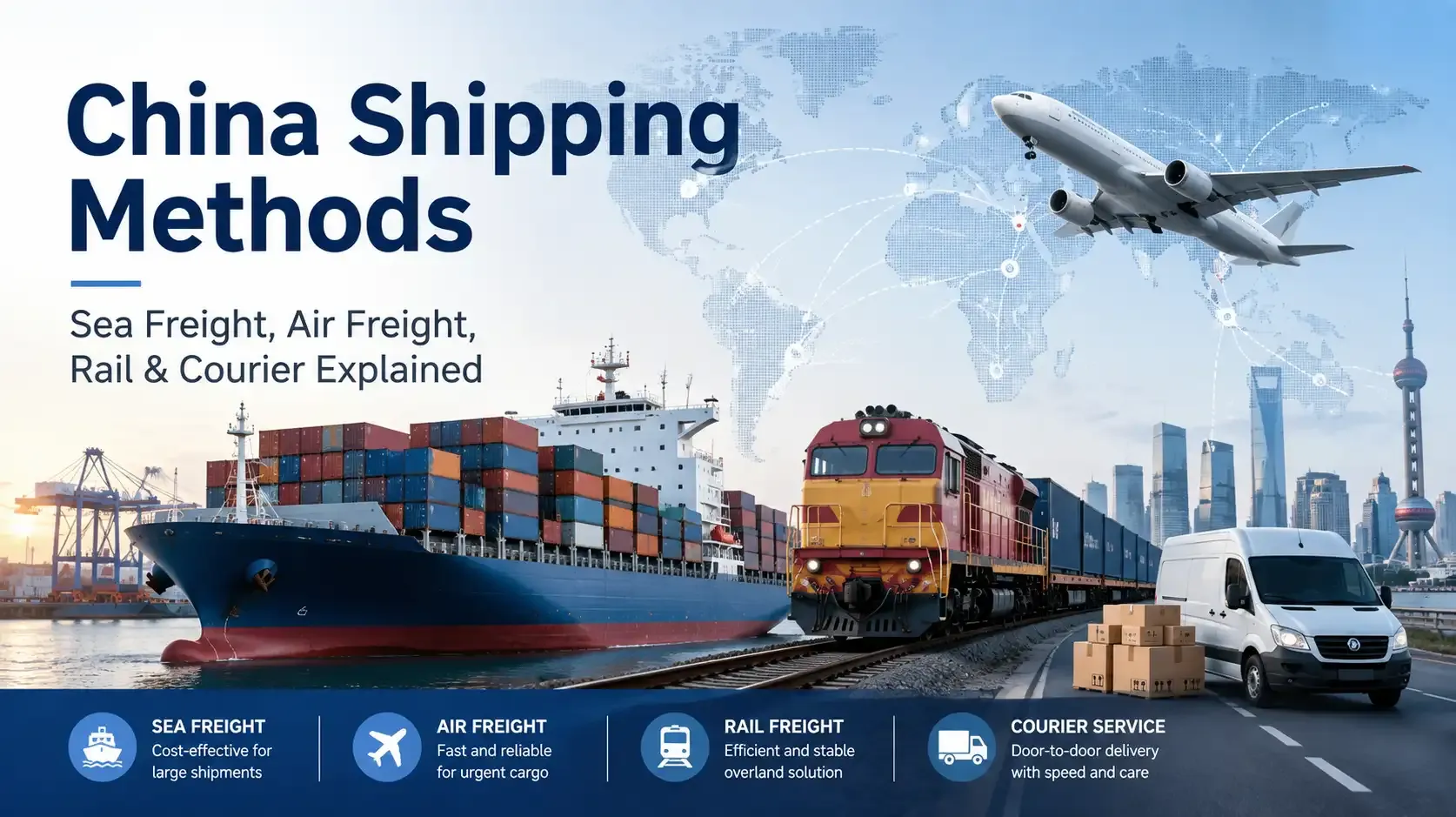
For most international buyers, shipments from China are transported using one of four main methods:
- Sea freight
- Air freight
- Rail freight
- International courier
Each method has different advantages, limitations and cost structures.
This guide explains how the main China shipping methods work and how B2B importers can choose the most suitable option for their orders.
If you are still planning the sourcing and production stage, our China sourcing services can help coordinate suppliers, product development, quality control and export arrangements before shipment.
What Are the Main Shipping Methods from China?
International shipments from China are generally transported through four main logistics channels.
Sea Freight
Sea freight is commonly used for medium and large commercial shipments.
Goods are loaded into shipping containers and transported from Chinese ports to destination ports around the world.
Sea shipping generally offers the lowest transportation cost per unit for high-volume orders, although transit times are longer than air freight or courier services.
Air Freight
Air freight transports commercial cargo through airport-to-airport cargo networks.
It is much faster than sea freight and is commonly used for products that are relatively lightweight, higher in value or required within a shorter delivery window.
However, air freight usually costs significantly more than ocean transportation.
Rail Freight
Rail freight is primarily used for shipments between China and certain destinations across Europe and Central Asia.
It can provide a middle option between sea freight and air freight in terms of both cost and transit time.
Rail freight is particularly useful for some inland destinations where railway logistics networks are well developed.
International Courier
Courier companies such as DHL, UPS and FedEx provide door-to-door express transportation.
Courier shipping is generally the simplest method for small shipments, samples and urgent parcels.
However, it becomes expensive when shipment weight or volume increases.
Sea Freight from China
Sea freight remains one of the most important transportation methods for international trade from China.
For importers purchasing wholesale quantities, it is often the most economical option.
When Should You Use Sea Freight?
Sea freight is usually suitable when:
- Your shipment is relatively large
- Your products are not urgently required
- Transportation cost is more important than speed
- Your goods have a low or medium value relative to their volume
- You regularly import wholesale quantities
Typical products transported by sea include household goods, textiles, apparel, kitchenware, toys, furniture, packaging products and general merchandise.
For a more detailed explanation of FCL, LCL, CBM, container sizes, shipping costs and documentation, read our Sea Freight from China guide.
FCL vs LCL Sea Freight
There are two main ways to ship goods by sea.
FCL — Full Container Load
FCL means one importer books an entire shipping container.
Common container sizes include:
- 20-foot container
- 40-foot container
- 40-foot high cube container
FCL becomes increasingly economical as shipment volume increases.
It also reduces cargo handling because the goods generally remain inside the same container for most of the international journey.
LCL — Less Than Container Load
LCL allows several importers to share space inside the same container.
Instead of paying for an entire container, each importer pays according to the volume or chargeable quantity of their shipment.
LCL can be useful for smaller commercial orders that are too large for courier or air freight but do not require a full container.
However, LCL shipments may involve additional handling, consolidation and destination charges.
Advantages of Sea Freight
The main advantages include:
Lower Cost for Large Orders
When transporting larger quantities, sea freight generally offers a much lower cost per unit than air freight.
Large Cargo Capacity
Ocean containers can carry large quantities of products, making them suitable for wholesale and bulk orders.
Suitable for Many Product Categories
Most general merchandise can be transported by sea as long as it complies with shipping and destination-country regulations.
Disadvantages of Sea Freight
The main disadvantage is delivery time.
Sea transportation may require several weeks depending on the origin port, destination port, route and customs process.
Importers should therefore include sufficient shipping time when planning inventory.
Additional costs may also occur at ports, terminals and destination warehouses.
For this reason, buyers should compare the total landed cost, rather than looking only at the ocean freight quotation.
Air Freight from China
Air freight provides significantly faster international transportation.
It is commonly used when buyers cannot wait for ocean shipping but the shipment is too large or expensive for standard courier services.
When Should You Use Air Freight?
Air freight may be suitable when:
- Delivery time is important
- Products have relatively high value
- Shipment volume is moderate
- Inventory is urgently required
- Products are lightweight relative to their value
Examples may include electronics, fashion accessories, product launches, replacement inventory and urgent production components.
For a detailed guide to air freight costs, chargeable weight, transit time and when to use air shipping, read our Air Freight from China guide.
How Air Freight Pricing Works
Air freight is generally calculated using chargeable weight.
This means carriers compare the actual gross weight with the shipment's volumetric weight.
Whichever is higher may be used for freight calculation.
For lightweight but bulky products, volumetric weight can therefore significantly affect shipping cost.
This is why improving carton size and packaging efficiency can reduce logistics expenses.
Advantages of Air Freight
Faster Transportation
Air freight significantly reduces international transit time compared with ocean shipping.
Useful for Urgent Inventory
Businesses can replenish stock faster when demand unexpectedly increases.
Good for Higher-Value Products
For products with higher selling prices and relatively low shipment weight, the additional transportation cost may be commercially acceptable.
Disadvantages of Air Freight
The biggest limitation is cost.
Air freight can become expensive for bulky or heavy products.
There may also be stricter restrictions for products containing batteries, liquids, chemicals, magnets or other regulated materials.
Buyers should confirm cargo restrictions before arranging transportation.
Rail Freight from China
Rail freight has become an additional logistics option for certain China-to-Europe trade routes.
It can provide a compromise between ocean transportation and air freight.
When Is Rail Freight Suitable?
Rail freight may be suitable when:
- The destination is in Europe or Central Asia
- Sea freight is too slow
- Air freight is too expensive
- The shipment volume is suitable for commercial freight
- The buyer wants a balance between cost and speed
Rail routes can be particularly useful for inland destinations because cargo may avoid some of the additional transportation required between seaports and inland cities.
Advantages of Rail Freight
Rail freight can offer:
- Faster transportation than many sea routes
- Lower cost than air freight in many situations
- Suitable capacity for commercial shipments
- Convenient access to some inland European markets
However, availability depends heavily on origin, destination and route.
Rail freight is therefore not a universal replacement for ocean shipping.
International Courier Shipping from China
Courier services are widely used for small international shipments.
Common express carriers include DHL, FedEx and UPS.
The carrier normally collects the shipment from the supplier or warehouse and delivers it directly to the buyer's address.
When Should You Use Courier Shipping?
Courier services are ideal for:
- Product samples
- Small trial orders
- Documents
- Replacement products
- Urgent parcels
- Lightweight commercial shipments
For example, before placing a 3,000-piece production order, a buyer may first receive product samples through express courier.
Using sea freight for such a small parcel would usually be impractical.
Advantages of Courier Shipping
Door-to-Door Service
Courier companies normally manage most of the transportation process from collection to final delivery.
Fast Delivery
Express courier is often one of the fastest options for small international shipments.
Easy Tracking
Major courier companies provide detailed online shipment tracking.
Disadvantages of Courier Shipping
Courier shipping becomes increasingly expensive as weight and parcel size increase.
It is therefore mainly suitable for smaller shipments rather than large wholesale orders.
Import taxes and customs charges may also still apply depending on the destination country.
Sea Freight vs Air Freight vs Rail vs Courier
The following comparison can help buyers quickly understand the differences.
Shipping Method | Relative Cost | Relative Speed | Best For |
|---|---|---|---|
Sea Freight | Low | Slow | Large wholesale shipments |
Air Freight | High | Fast | Urgent or higher-value cargo |
Rail Freight | Medium | Medium | China-Europe commercial shipments |
Courier | High for larger parcels | Very Fast | Samples and small shipments |
There is no single shipping method that is best for every order.
The correct choice depends on the commercial requirements of each shipment.
How to Choose the Best Shipping Method from China
Before booking transportation, buyers should evaluate several factors.
1. Shipment Volume
Large shipments usually benefit from sea freight.
Smaller shipments may be more economical through air freight or courier services.
2. Product Value
Higher-value products may justify faster transportation.
Low-value and bulky products generally require more cost-efficient logistics.
3. Delivery Deadline
If the goods must arrive quickly, air freight or courier services may be necessary.
If the buyer has sufficient inventory and flexible deadlines, sea freight can significantly reduce transportation cost.
4. Product Characteristics
Some products require special handling.
Examples include:
- Lithium batteries
- Liquids
- Powders
- Chemicals
- Magnets
- Dangerous goods
- Oversized products
Always confirm transportation requirements before production is completed.
5. Destination Country
Shipping options and costs vary significantly between destinations.
Sea freight may be ideal for one market, while rail or air freight may be more practical for another.
What Is the Cheapest Way to Ship from China?
For large commercial shipments, sea freight is usually the most economical option per unit.
However, the cheapest freight quotation does not always result in the lowest total cost.
Importers should also consider:
- Chinese local transportation
- Export documentation
- Port charges
- Customs clearance
- Import duties
- Destination handling
- Final delivery
- Warehousing
- Insurance
The correct comparison is therefore the total landed cost of the goods.
Can You Combine Products from Multiple Suppliers?
Yes.
Buyers sourcing different products from several Chinese suppliers can often consolidate the goods into one shipment.
For example, a buyer purchasing:
- Kitchenware from one supplier
- Gift bags from another supplier
- Towels from another supplier
- Promotional products from a fourth supplier
may arrange for all suppliers to deliver their goods to one warehouse in China.
The products can then be checked, consolidated and exported together.
This can reduce duplicated international shipping and handling costs.
SML Supply works with buyers purchasing products across different supplier networks and can coordinate product sourcing, inspection and shipment preparation through our export support service.
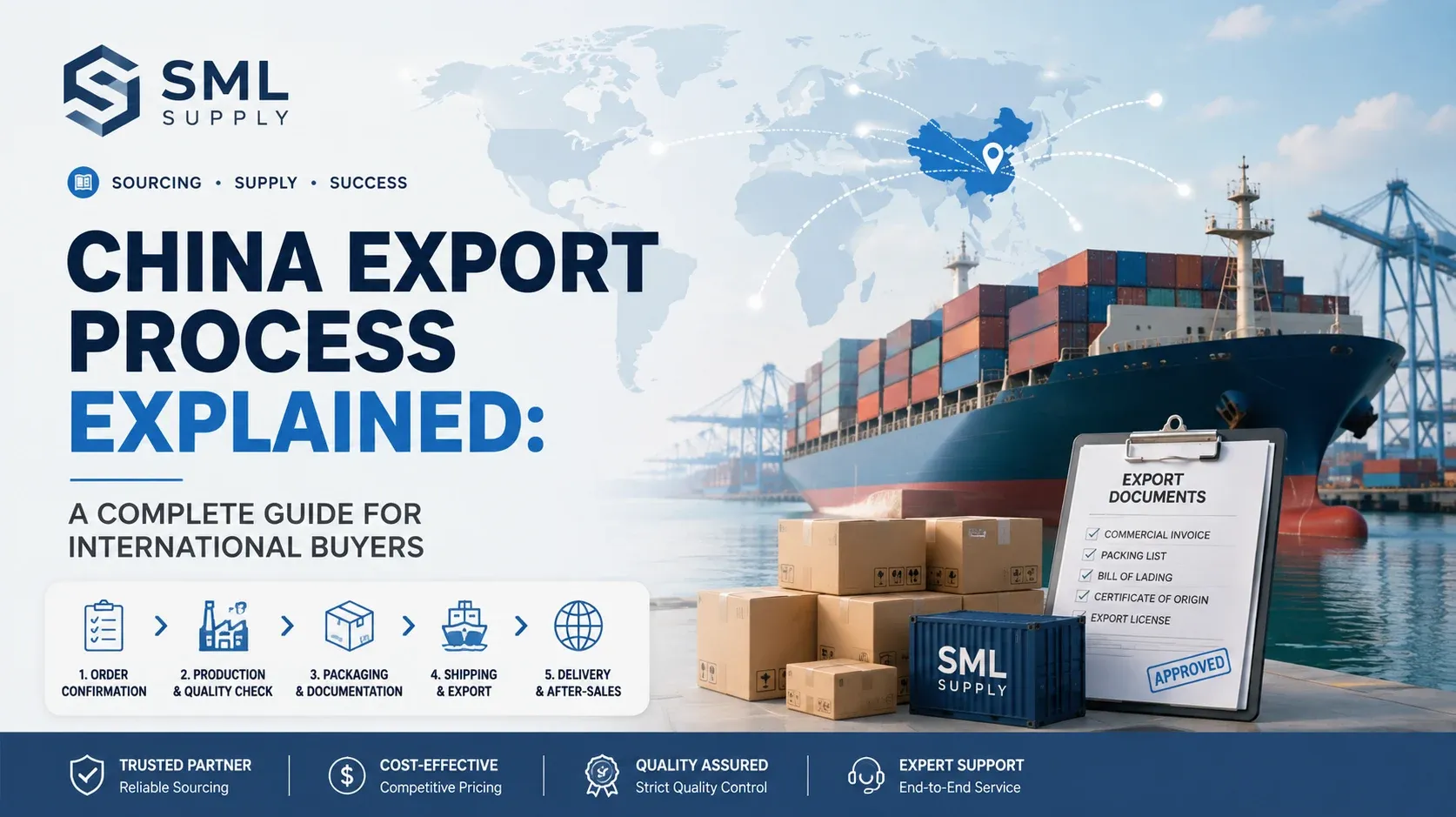
What Documents Are Commonly Required for Shipping from China?
International shipments normally require several commercial and transport documents.
Depending on the shipment, these may include:
- Commercial invoice
- Packing list
- Bill of lading
- Air waybill
- Certificate of origin
- Customs declaration documents
- Product-specific certificates
The exact documentation depends on the product, shipping method and destination market.
Importers should verify destination-country requirements before shipment.
Should You Buy Shipping Directly From the Supplier?
Some suppliers can arrange international shipping, while others only quote goods based on EXW or FOB terms.
Whether the supplier should arrange freight depends on several factors.
A buyer should understand:
- Which Incoterm is being used
- Which charges are included
- Who handles export customs
- Who controls the freight booking
- Who pays destination charges
- Who handles import clearance
For regular importers, comparing freight quotations independently can provide greater visibility over logistics costs.
EXW, FOB, CIF and DDP
Shipping quotations from China are frequently provided using international trade terms such as:
EXW
The buyer takes responsibility for the goods from the supplier's facility.
FOB
The supplier generally handles the goods up to the agreed Chinese port and export stage.
CIF
The seller arranges ocean freight and insurance to the named destination port, subject to the agreed terms.
DDP
The seller or logistics provider arranges transportation through to the agreed destination with duties and customs responsibilities handled according to the DDP arrangement.
The exact responsibilities under each Incoterm should always be confirmed before placing an order.
For a detailed comparison of buyer and seller responsibilities, shipping costs and risk allocation, read our FOB vs CIF vs EXW guide.
How SML Supply Supports International Shipping
International shipping works best when logistics planning starts before production is completed.
At SML Supply, we help international B2B buyers coordinate the sourcing and export process in China.
Our support may include:
- Supplier coordination
- Product sourcing
- Packaging confirmation
- Quality inspection
- Carton and shipment information
- Supplier consolidation
- Export preparation
- Logistics coordination
Our role is not limited to finding products.
We help buyers connect sourcing, supplier management, quality control and export preparation into one coordinated process.
Frequently Asked Questions
What is the best shipping method from China?
For large orders, sea freight is usually the most cost-efficient. Air freight is better for urgent commercial cargo, while courier shipping is more suitable for samples and small parcels.
Is air freight faster than sea freight?
Yes. Air freight generally provides much faster transportation, but the cost is usually higher.
What is the cheapest shipping method from China?
Sea freight is generally the lowest-cost option for larger commercial shipments, although destination charges and total landed cost must also be considered.
Can I ship goods from multiple Chinese suppliers together?
Yes. Products from different suppliers can often be delivered to a consolidation warehouse and combined into one international shipment.
Should I use courier shipping for wholesale orders?
Courier shipping is usually better for samples and small orders. Large commercial shipments normally become more economical through sea freight, air freight or other freight services.
Can SML Supply arrange shipping from China?
SML Supply can assist buyers with supplier coordination, consolidation, export preparation and logistics coordination depending on the sourcing project and destination.
Final Thoughts
Choosing the right shipping method from China requires balancing cost, speed, shipment size and inventory requirements.
For large wholesale orders, sea freight is usually the most economical option.
For urgent cargo, air freight can significantly reduce transportation time.
Rail freight provides another option for selected China-Europe routes, while courier services remain ideal for samples and small parcels.
Importers should evaluate the complete logistics process rather than comparing freight prices alone.
If you are sourcing products from several Chinese suppliers and need support with supplier coordination, quality control, consolidation or export arrangements, contact SML Supply to discuss your sourcing requirements.