Oct 26, 2026Import & Shipping Guide
How to Consolidate Shipments from Multiple Suppliers in China
Buying from several suppliers in China? See how to coordinate receiving, storage, consolidation, handling, and export preparation through one process.
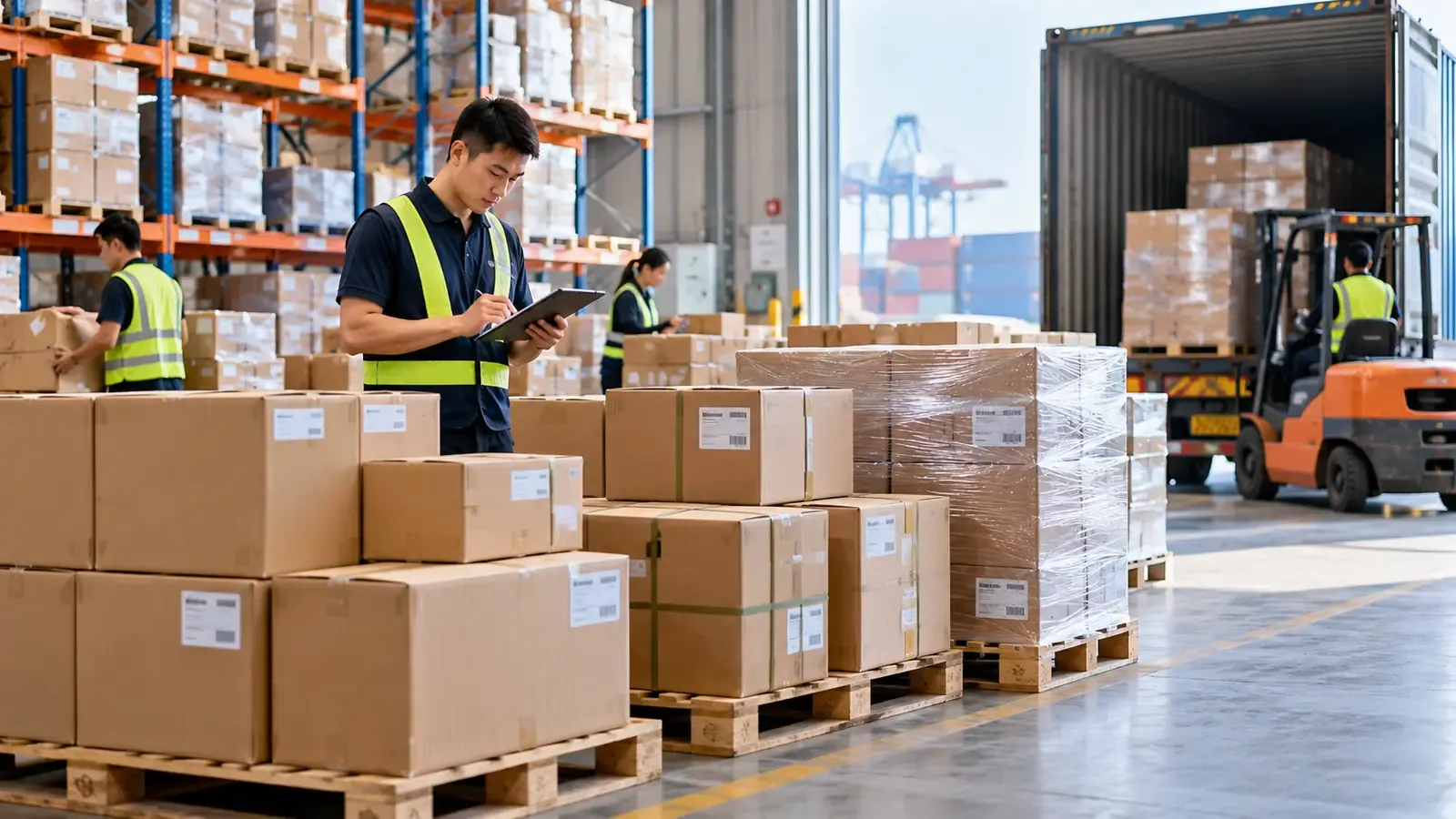
When you buy from several suppliers in China, the main challenge is usually not finding a shipping method. It is coordinating different completion dates, getting the goods into one place, confirming what has arrived, handling packaging or labeling issues, and preparing one workable export plan.
For many orders, the practical solution is to send goods from different suppliers to one warehouse in China, hold earlier arrivals when necessary, complete the required receiving and handling work, and then prepare the combined cargo for shipment.
SMLS can coordinate this process for multi-supplier orders.
When Does Consolidation Make Sense?
Consolidation is most useful when several suppliers are shipping to the same destination and their goods will be ready within a reasonable time window.
It may make sense when:
- several suppliers are completing different products for one order;
- production finishes on different dates;
- the buyer wants one coordinated shipment instead of several separate exports;
- cartons, labels, or packaging need to be checked before shipment;
- some goods may require repacking or relabeling;
- the buyer wants one point of coordination for the China-side process.
It does not always make sense to wait for every supplier.
If one order is urgent or one supplier is significantly delayed, holding the other goods may create more storage cost and delay than value. In that case, separate shipments may be more practical.
For buyers managing several product categories as part of one sourcing project, see our guide to buying multiple product categories from China.
1. Coordinate Supplier Completion Dates
The first step is to understand when each supplier will actually be ready.
Before planning one combined shipment, the buyer needs a clear view of:
- which orders are complete;
- which are still in production;
- expected dispatch dates;
- whether one supplier is likely to delay the whole shipment.
This determines whether consolidation will simplify the order or simply make ready goods wait unnecessarily.
2. Arrange Delivery or Pickup to the Warehouse
Once a supplier's goods are ready, they need to reach the consolidation warehouse.
Depending on the order and supplier arrangement:
- the supplier may deliver directly to the SMLS warehouse; or
- SMLS may coordinate pickup.
The arrangement is decided based on the actual order and supplier situation.
If additional domestic transportation is required and creates an extra cost, that cost can be included in the buyer's PI.
Domestic pickup should therefore not be assumed to be automatically included or free.
3. Check What Arrives at the Warehouse
When goods arrive at the SMLS warehouse, the default Warehouse Receiving Check covers:
- outer cartons;
- quantity;
- labels.
This confirms the basic condition and identity of the shipment received from the supplier.
If the buyer needs Product QC, that is arranged separately. Warehouse receiving should not be treated as a full product inspection.
4. Track Supplier Arrivals
With several suppliers, buyers need to know not only what has arrived, but also what is still outstanding.
SMLS provides arrival-status feedback as suppliers deliver their goods to the warehouse.
This makes it easier to see whether the consolidation plan is progressing normally or whether one supplier is becoming the critical delay.
Goods that arrive earlier can be temporarily stored while the remaining suppliers complete and deliver their orders.
Warehouse storage is not a default free service. Relevant warehouse charges can be included in the customer's PI based on the actual project arrangement.
5. Resolve Packaging, Carton, or Label Issues Before Export
Once goods from several suppliers are in one place, some shipments may need additional handling before they can move forward together.
SMLS can arrange paid handling when required, including:
- carton consolidation;
- repacking;
- relabeling.
These services are not automatically free.
The important question is why the additional work is required.
If the Supplier Made the Error
If corrective handling is required because a supplier or factory made an error, the customer does not bear the related correction cost.
If the Buyer Requests a Later Change
If the goods were completed according to the original requirement but the buyer later requests different packaging, labels, repacking, or another handling change, the related extra cost is borne by the buyer.
This keeps the responsibility for corrective work and buyer-requested changes separate.
Can I Send Goods From a Supplier I Found Myself?
Yes. Buyer-sourced goods can be received at the SMLS warehouse.
However, receiving the goods at the warehouse does not automatically mean they can be included in an export arranged through SMLS.
If goods were purchased and paid for directly by the buyer, and the buyer wants them included with goods sourced through SMLS, the transaction, payment, and export-document arrangement must be reviewed in advance.
Where SMLS is involved in arranging the export, the commercial transaction and export documentation need to match the actual shipment structure.
For this reason, buyers should tell SMLS about independently purchased goods before the final export arrangement is made.
Whether those goods can be included in the same shipment depends on the specific transaction and documentation setup.
6. Prepare the Combined Cargo for Export
Once the required suppliers have delivered and any necessary handling is complete, the order can move into final export preparation.
Depending on the shipment, this may include:
- confirming final cargo information;
- coordinating shipment preparation;
- supporting China-side export documentation;
- arranging delivery to a freight warehouse;
- coordinating international shipping.
If the final shipment will move by ocean freight, buyers can review our Sea Freight from China guide for the broader transport decision.
If You Already Have a Freight Forwarder
If you already have a nominated freight forwarder, SMLS can coordinate delivery of the consolidated goods to the forwarder's designated warehouse and assist with applicable China-side export procedures.
Providing the forwarder's instructions early helps avoid delays after all suppliers have arrived.
If You Do Not Have a Freight Forwarder
If you do not have a nominated forwarder, SMLS can look for a suitable freight agent and obtain a quotation based on the actual cargo and route.
The quotation will depend on factors such as:
- destination;
- cargo volume and weight;
- product type;
- transport mode;
- current freight conditions;
- handling requirements.
SMLS does not guarantee that every freight agent has a customs-clearance partner in the destination country.
Destination-country import clearance should be confirmed separately for the specific shipment rather than assumed to be included.
What Costs Can Be Added to a Consolidation Order?
There is no single standard consolidation price that applies to every order.
Depending on the actual project, additional costs may come from:
- warehouse storage;
- domestic pickup or delivery;
- carton consolidation;
- repacking;
- relabeling;
- packaging materials;
- separately arranged Product QC;
- international freight.
The buyer should therefore evaluate the total order and logistics cost rather than looking only at the international freight rate.
When Is Separate Shipping Better?
Consolidation should make the order easier to manage, not create unnecessary delay.
Separate shipping may be more practical when:
- one product is urgently needed;
- one supplier has a major production delay;
- waiting creates excessive warehouse cost;
- different goods require different shipping arrangements;
- different orders are going to different destinations.
The correct decision depends on the actual production schedule, cargo, cost, and delivery requirement.
A Practical Multi-Supplier Workflow
A typical consolidation project may follow this sequence:
Confirm supplier completion dates
→ arrange supplier delivery or pickup
→ receive goods at the warehouse
→ check outer cartons, quantity, and labels
→ provide arrival-status updates
→ temporarily store earlier arrivals when required
→ arrange separate Product QC if needed
→ arrange repacking, relabeling, or carton consolidation where required
→ confirm the required suppliers have arrived
→ prepare the combined cargo for export
→ deliver to the buyer's nominated forwarder or obtain a freight quotation
→ coordinate the China-side shipment process.
The exact process depends on the actual suppliers, products, destination, and shipment arrangement.
Need to Consolidate Orders From Several Suppliers in China?
If you already have several suppliers and want SMLS to review whether their goods can be received, combined, and prepared for one shipment, send us the actual order information.
Helpful details include:
- number of suppliers;
- products being purchased;
- current production status;
- expected ready dates;
- estimated cartons, volume, or weight if available;
- whether repacking or relabeling may be required;
- destination country;
- whether you already have a nominated freight forwarder;
- whether any goods were purchased and paid for directly outside the SMLS sourcing process.
SMLS can review the consolidation and shipment arrangement based on your actual order.